Author Archives: DHamel

Mom says Summerfest Camp has helped her son grow in every way

August 30, 2019

By Deron Hamel

“If he succeeds at camp, he’ll succeed in life.”

This was the message a neurologist had for Renee Long after learning Renee was sending her son, Finlay, to Summerfest Camp.

Those words have certainly rung true, Renee says.

Finlay, now 14, has attended Summerfest, a camping experience for children and youths aged six to 15 who are living with seizure disorders, for five summers.

Renee says she has seen Finlay grow in many ways since he started attending Summerfest, which is held every July and August at Camp Couchiching near Orillia.

The Summerfest Camp experience, Renee says, has helped her son learn about others. It has provided him with more independence and self-initiative, she adds.

For example, Renee says Finlay woke up at 7:30 one morning at camp and decided to help the cook for three hours. Why? Because he knew the dishes in the kitchen would be piling up and there was no one else offering to help.

“The length of three hours of solid work shows determination, as he had not done anything like this before,” Renee says.

Summerfest Camp has been an opportunity for Finlay to make valuable social connections. Renee says Finlay and another camper became friends at Summerfest. The two would have in-depth discussions, which Renee says wasn’t happening when Finlay was at school.

“It is another proud moment,” Renee says. “I see a different young boy returning from camp to open an early preview of the young man he is meant to be.”

Renee and her husband learned about Summerfest Camp through Epilepsy Toronto. While the couple was at first hesitant about Finlay being away from home, another parent “strongly encouraged” them to send Finlay to Camp Couchiching.

Renee says she and her husband are glad they took this advice.

“He has grown in independence, self-esteem, initiation and making friends over this summer,” she says of her son.

Renee says Finlay also enjoys the activities Summerfest Camp offers. Some of his favourite programs have been paddle-boarding, kayaking and outdoor living skills.

“He (also) enjoyed being away from his parents, which is invaluable to learn to negotiate in another environment and make his own decisions,” Renee says.

Finlay has enjoyed the outdoor aspect of being at Summerfest Camp as well, Renee says. He especially enjoys walking around the camp and being in the midst of nature.

“He says the trees and the sounds of the birds calm him,” Renee says. “When he returned home, he had a transition back to the city and immediately missed the outdoor camp environment. The exposure to water activities, campers and learning were wonderful for him.”

Aside from the social and emotional benefits Summerfest Camp has provided Finlay, Renee says she has also seen physical benefits.

Renee is a craniosacral therapist and she has been treating Finlay since he was 2 1/2 years old. During a visit to Summerfest Camp one weekend, Renee gave Finlay a treatment and was surprised by what she found.

“His body was the healthiest I have observed since the third return of his seizures over a year ago,” Renee says. “The brain membranes were relaxed, his whole body was alive, rather than taxed by the seizures. …

“I was astounded by the benefits of an outdoor environment, fun, friendships, the lake, and having the opportunity to exercise every day (has had on Finlay). I will always be thankful for the priceless gift (Summerfest Camp has) given Finlay.”
Mother says Summerfest Camp brought a ‘sparkle’ back to her daughter’s eyes

August 1, 2019

By Deron Hamel

Isabella De Sousa recently returned from attending Summerfest Camp, and the 15-year-old says she has noticed a change in herself since she had her first experience two years ago at the summer camp designed for children and youths living with epilepsy.

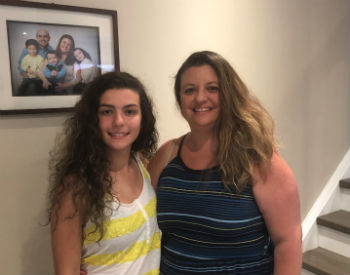
Pictured above, Isabella De Sousa and her mother, Sabrina. Isabella has attended Summerfest Camp three times.

“I feel like I am a lot more comfortable being able to talk about my epilepsy, not just with people who have experiences (with epilepsy), but with anybody,” Isabella says.

“I (have become) more open with it lately.”

Having been to Summerfest Camp for three summers, Isabella says she has enjoyed the experience more each time. She says her favourite part about being at Summerfest Camp is that it allows her to be herself.

“I really enjoy, not just making new friends, but also having people that I can relate to and everything we’re going through – I can talk to them,” she says.

Sabrina De Sousa, Isabella’s mother, says she has also noticed her daughter’s self-confidence increase since she began attending Summerfest Camp. She recalls how Isabella was apprehensive about spending a week at the camp her first time.

But when Isabella arrived, she found the camp councillors put her concerns to rest. After camp was over, she told Sabrina she wanted to go back next time for two weeks.

“She told me she didn’t feel any different; she knew there were other children there with epilepsy but you couldn’t tell,” Sabrina says.

“The second year she went for two weeks, and she came back even happier because she had (made friends with) someone else there who had epilepsy and they were able to talk and compare stories.”

Having epilepsy can take a lot out of a teenager, Sabrina says. A young person with epilepsy may spend lots of time in a doctor’s office or having MRIs and EEGs, and the experience can take some of the “sparkle” from their eyes, she adds.

“They can lose a little bit of that sparkle, but every year (Isabella is at Summerfest) I see more and more of that sparkle coming back,” Sabrina says.

Isabella has two brothers who do not have epilepsy that have joined her at Summerfest, and Sabrina says the experience has been enriching for her sons.

“It has also been very good for my two boys because one of the first things they said to me after coming home was, ‘Mum, there are people there who have epilepsy and people there who do not have epilepsy, and you can’t tell who has what.’ That was eye-opening for my two boys,” Sabrina says.

“They come back as different children; they really do. They come back happier.”

Held near Orillia at Camp Couchiching every summer, Summerfest Camp enables children aged six to 15 who are living with seizure disorders to attend camp with other children. The camp has the resources to meet the needs of children living with epilepsy and provides a setting where they can enjoy a carefree camping experience.

Summerfest Camp was founded in 1994 by Anita Allen, a neurology clinic nurse at Toronto’s Hospital for Sick Children (SickKids).

Action Day opened ambassador’s eyes to the need for more epilepsy awareness, but he also has hope

May 21, 2019

By Deron Hamel

TORONTO – Donovan Mckenzie says one thing stood out for him most while attending Epilepsy Action Day on April 8 at Queen’s Park: how little MPPs knew about epilepsy and its impact on people’s lives.

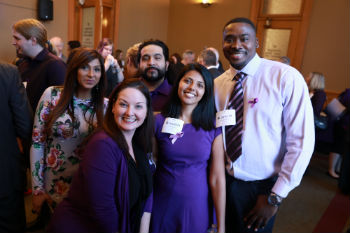
Pictured above, a scene from Epilepsy Action Day at Queen’ Park on April 8.

The good news is that when the day was over, MPPs had heard the stories of people living with seizure disorders and had a better understanding of how prevalent epilepsy is in Ontario, he says.

Donovan is a volunteer with Epilepsy Toronto and attended his first Epilepsy Action Day this year as an ambassador for the agency.

“It really opened my eyes,” he says of the experience. “A lot of people have heard the word ‘epilepsy’, but they don’t have a lot of knowledge about what epilepsy is. But I did feel that I was with a team of people that was able to spread the word and give them more knowledge.

“It was something that inspired me, but I was still in shock that people did not know all about epilepsy.”

It is estimated one in every 100 Canadians is living with epilepsy. This statistic was underscored by delegates at Epilepsy Action Day to help MPPs understand epilepsy’s impact, and Donovan says it was an important message to convey.

“There are so many people … in Toronto, in Ontario and in Canada, who don’t get the support they need, and I think the big issue was (the politicians) not knowing that,” he says.

Donovan says his favourite part of attending Epilepsy Action Day was hearing people share their stories about living with epilepsy to help others understand their condition – and doing so with smiles.

“Seeing people smiling made me feel … (that) I’m not alone; these people are happy and they have epilepsy, so that was the greatest thing,” he says. “We also let the politicians know that (epilepsy awareness) is important.”

Donovan says there’s a stigma attached to epilepsy, but raising more awareness about epilepsy could help break down preconceived notions about the condition. This, he says, extends beyond letting politicians know about epilepsy’s prevalence and impact.

For example, Donovan says he has mentioned Purple Day to people who know that every March 26 is dedicated to worldwide epilepsy awareness. These people know about Purple Day simply because their workplace acknowledges it. However, he has mentioned Purple Day to others who have never heard of it.

“That is something we need to address,” he says.

The purpose of Epilepsy Action Day is for representatives from Epilepsy Ontario and the community-based support agencies to meet with MPPs to discuss the needs of people living with seizure disorders and what role government can play to improve the quality of life for those living with the condition.

Epilepsy Action Day began in 2009.

Winning Miss Canada title is helping Christine Jamieson raise epilepsy awareness

April 1, 2019

By Deron Hamel

When she was diagnosed with epilepsy at 16, Christine Jamieson says she never could have imagined that one day she would be crowned Miss Canada.

But that’s exactly what happened.

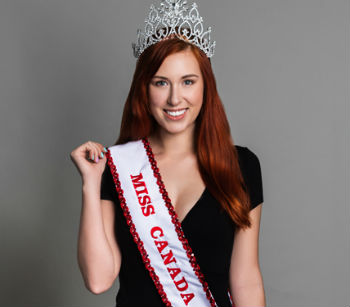
Christine Jamieson, pictured above, recently won the Miss Canada 2019 pageant in Montreal.

Christine recently won the Miss Canada pageant, competing against 36 contestants in Montreal for the title. She’s hoping her story will inspire others living with epilepsy to understand that they should never let a seizure disorder interfere with their ambitions.

At the time of her diagnosis, Christine, now 27, was having up to four tonic-clonic seizures and up to 10 absence seizures per day.

“(Epilepsy) was something that really shaped my life,” she says. “Looking back, I am so glad I had the support system that I did, because I didn’t have hope at that time in my life.

“I could never have imagined myself even graduating high school or going to university, let alone becoming Miss Canada, so my goal is to inspire others who are in that situation, to let them know that there is hope and there is a future for you.”

Christine is working with several organizations, including the Center for Epilepsy and Seizure Education, the Canadian Epilepsy Alliance and the BC Epilepsy Society, to raise epilepsy awareness and to share her story.

Since winning the Miss Canada title in early March, Christine has been busy speaking with epilepsy centres across Canada and internationally to help inspire people and raise awareness.

So far, it has been quite the experience, she says.

“Being able to share my story and have the positive reception that I have had from people with epilepsy and from people who have not had the experience or do not have a family member with epilepsy has definitely been amazing,” she says.

“The long-term goal, of course, is always to find a cure (and) to create more education programs, which is something that we are really working on.”

You can learn more about Christine by visiting her website.