Author Archives: eCreative Studios

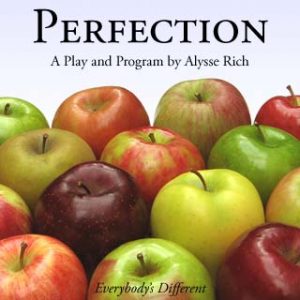
Perfection

September 2, 2011

What Happens Now?


Simply click on any underlined item to view the related material. You may cut and paste it into a word document, or save it to your computer as a PDF file. Or, you can download this entire package at once by clicking here.

You can download the entire package in French by clicking here:
Perfection – French Version (pdf)

Introductory Letter to Teacher or Coordinator

Epilepsy Information (Teacher’s Resources)

  • Epilepsy Information: What is Epilepsy?
  • First Aid for Seizures

Program Version I: Reader’s Theatre

  • Materials: What You’ll Need to Get Started
  • Description: Getting Started
  • Expectations: Grade Four
  • Teacher Role Assignment and Evaluation Sheet
  • Perfection: Reader’s Theatre Script

Program Version II: The Play as Presentation

  • Letter to Grade 6 – 12 Teacher
  • PUBLIC RELATIONS: Solicitation Letter Template
  • PUBLIC RELATIONS: Thank You Letter Template

Perfection: Script for Performance by Grades 6 – 12

Grade 4 Follow-up Activities: Active and Cooperative

  • Discussion Questions
  • Activity #1: Improvisational Scenarios
  • Activity #2: Scenario-Solving
  • Activity #3: Something New

Grade 4 Follow-up Activities: Written and Individual

  • Glossary of Terms used in Word Search and Crossword
  • Perfection Word Search Activity
  • Answer Sheet
  • Perfection Crossword Puzzle
  • Answer Sheet

Certificate for Classroom

OBCL funds its first Epilepsy Scholarship Awards

August 18, 2011

March 22, 2007
For immediate release

THORNHILL – The Epilepsy Scholarship Awards, funded by Osler Business Consulting Ltd., will help young people living with epilepsy across Ontario continue their community or university studies. Each of the 12 winners will receive a $1000 award applicable to their 2007 academic year. The scholarship award program is open to all young people between the ages of 16 and 29, who are under the care of a Canadian physician for the treatment of epilepsy.

The students awarded an OBCL Epilepsy Ontario scholarship for 2007 are:

Emily Banks – London
Heather Bartok – Niagara
Jacquelin Chatterpaul – York Region
Skye Corey – London
Alex Dolan – York Region
Carolyn Harris – Windsor
Nathalie Holroyd – Durham
Nadim S. – Toronto
Melissa Seichter – Hamilton
Lindsay Smyth – Durham
Chelsea Tobin – Kingston
Lynn Wilkins – Toronto

“Part of the application process is writing a short essay on – how epilepsy has changed my life. These essays always provide us with the insight into how debilitating, complicated, stressful and in most cases life altering a diagnosis of epilepsy or seizure disorder can be for these young people” says Lawton Osler, Founder of the Scholarship, member of the review committee and member of the Board of Directors of Epilepsy Ontario.

In one essay entitled, Why Me? Why Not., the author explains “I went from the top of my class to a vulnerable human being lying in the middle of the street in less then ten minutes. The day started off like any other…”

“It is true that many of the essays begin with outlining the difficulties these young people face, but most, if not all, end with very powerful statements of valuable lessons learned about coping, dealing with difficulties, appreciating what they have and how we can all learn to overcome… and even prosper from adverse conditions in our lives.” Osler continues, “It is overwhelmingly touching to see the positive attitude and determination of these young adults”

Dianna Findlay, Executive Director of Epilepsy Ontario says, “These young people have learned to cope and deal effectively with their disorder. Many of our provincial programs and services strive to help people become more accepting of their seizure disorder as well as helping to create a more accepting society. We do this through education, awareness, information and advocacy.”

A special presentation will take place at 7 PM on Friday March 30th at the Dean’s Conference room, Medical Sciences Building, 1 King’s College Circle, University of Toronto. Refreshments will be served and Executive Committee members, Chapter agency staff and families are invited to join us in the celebration.

For more information please contact Epilepsy Ontario’s executive director, Paul Raymond, or your local epilepsy agency.

Do you know your rights?

August 18, 2011

March, 2007
For immediate release

Do you know your rights?

1% of the population of Ontario has epilepsy. We are aware that people with epilepsy continue to be discriminated against and are forced into social isolation. We have chosen lavender as a flower and colour since the lavender flower is traditionally associated with solitude, symbolizing the feelings of isolation and seclusion that people living with epilepsy and seizure disorders often experience.

The focus of this year’s Awareness Campaign is to inform people living epilepsy and their families, friends and society in general of the importance of treating people with epilepsy fairly.

The Human Rights Code and Epilepsy

Discrimination “because of disability” is prohibited in all areas protected by the Ontario Human Rights Code. The Code defines disability as: any degree of disability, infirmity, malformation or disfigurement that is caused by bodily injury, birth defect or illness. Some examples of physical disabilities are listed in the Code, epilepsy being among these listed. Therefore, a person who has epilepsy is protected by law from all types of discrimination.

The Code states that the rights of a disabled person are not infringed upon if the right is denied because the person is incapable of fulfilling essential duties or requirements because of the disability. For example, a person who has epilepsy may be denied a job if their disability makes them incapable of performing the essential duties of the job.

Epilepsy Ontario has spent the better part of the last 51 years ensuring that people with epilepsy have a voice. For Epilepsy Ontario, advocacy is the act of pleading for or defending another person, empowering vulnerable people and promotes respect for their dignity, rights and freedoms.

Like others who have disabilities, people with epilepsy often face barriers to their basic human rights and freedoms. Employment, transportation, education, subsidized medication, insurance, driving issues, abuse, housing and isolation are just some of the many issues faced by people who have epilepsy. Through advocacy, changes can take place at the governmental, legal, social, economic and institutional levels.

Some of the day-to-day barriers that people with epilepsy face include issues relating to education, housing, transportation, subsidized and/or cost of medications, insurance, employment, and isolation. Gender, race and age further complicate these issues. Even where a person lives can be a barrier

Enhanced driver’s licenses, Enhanced Photo Cards and Travel to the U.S.

August 18, 2011

Thornhill, Ontario – February 1, 2010

As of June 1, 2009, the United States government’s Western Hemisphere Travel Initiative (WHTI) requires Canadian citizens entering the United States by land or water to present a valid passport or approved secure document that establishes the bearer’s identity and citizenship.

The Government of Ontario will provide two types of ‘enhanced’ identification cards as an alternative to a Canadian passport for crossing the border into the U.S. The Enhanced Driver’s License (EDL) and an Enhanced Identity Card can be used by Canadian citizens to enter the U.S. by motor vehicle or boat.

Valid passports are still required for air travel to the U.S.

Ontario residents living with Epilepsy who cannot obtain an enhanced driver’s license can apply for the Enhanced Photo Card which is scheduled to be available in spring 2011 at ServiceOntario locations across the province. It is estimated that photo cards will cost $35-$75.

The Ontario Government’s Photo Card Act, enacted June 3, 2008, governs four types of identification:

Driver’s license: permits holders to drive and may be obtained by residents of Ontario who have successfully passed a driver’s test. This is no longer accepted as valid identification for travel into the United States.

Enhanced driver’s license (EDL): is a driver’s license with additional citizenship information. It permits the holder to drive and is accepted by U.S. border officials as a valid travel and identity document for land and water crossing from Canada into the United States. It may be obtained by Canadian citizens who are licensed drivers.

Photo card: this card will function as a government issued identity document for Ontario residents who do not drive. This government issued photo card could be used when completing everyday transactions such as opening bank accounts. It cannot be used to cross the border into the U.S.

Enhanced photo card: This card will be similar to the photo card, but will contain citizenship information making it a valid travel and identity document that can be used for travel from Canada into the US, by land or water. This card should be available to all Canadian citizens by spring of 2011.

For more information, visit these external links:

Ministry of Transportation: Enhanced Driver’s License & Photo Card

Ministry of Transportation News Release

Western Hemisphere Travel Initiative

Kanetix Itinerary Planner

Canadians Travelling Abroad – Government of Canada website