Author Archives: eCreative Studios

Advocates encouraged by gov’t response to Epilepsy Awareness Month

March 28, 2013

Representatives from epilepsy support agencies say they’re encouraged by the reception their advocacy work with government officials received this month, and hope their colleagues provincewide will continue talking with politicians about the epilepsy community’s needs after March 31.

March is Epilepsy Awareness Month, and leaders from within the epilepsy community have been meeting with politicians from all government levels this month to provide information and education about the neurological disorder.
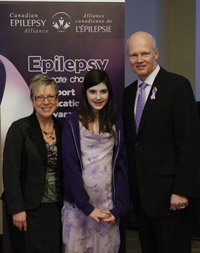
Epilepsy Ontario executive director Rozalyn Werner-Arcé, Purple Day founder Cassidy Megan and the Hon. Geoff Regan, MP, Halifax-West celebrate Purple Day for Epilepsy on Parliament Hill. This year, Purple Day was observed for the first time across the country as the official day for epilepsy awareness, since the Purple Day Act passed with unanimous support in June 2012.
Epilepsy Ontario executive director Rozalyn Werner-Arcé, Purple Day founder Cassidy Megan and the Hon. Geoff Regan, MP, Halifax West celebrate Purple Day for Epilepsy on Parliament Hill. This year, Purple Day was observed for the first time across the country as the official day for epilepsy awareness, since the Purple Day Act passed with unanimous support in June 2012.

The need to see Ontario’s proposed epilepsy strategy move forward was a major topic during meetings, as were the benefits the epilepsy community will see from the province’s recent five-year, $100-million funding to the Ontario Brain Institute, much of which will be spent on epilepsy research.

As part of the proposed strategy, which was designed by an expert panel, epilepsy care centres with state-of-the-art equipment would be established provincewide and serve as primary access points for people with epilepsy. Through these facilities, patients would have access to epileptologists, psychologists and social workers. The sites would be equipped with the latest in epilepsy monitoring and imaging equipment.

Epilepsy Simcoe County executive director Melanie Money says the greatest success she saw from her advocacy work was bringing local, provincial and federal leaders together at the same time to discuss issues facing the epilepsy community — particularly the need for a provincial strategy and the urgency of legislation to address medication shortages.

The agency recently hosted a luncheon that brought together Barrie MP Patrick Brown, Barrie Mayor Jeff Lehman, Orillia Mayor Angelo Orsi and a representative from Barrie MPP Rod Jackson’s office.

“We were able to educate those politicians to make them aware of the drug shortage, to make them aware of the strategic plan that we have going on — what we came away with was support,” says Money, who has also been working with Brown, a member of the standing health committee, to develop a strategy to address drug-shortage issues.

“We had people who didn’t know what was going on in (the epilepsy community). By being able to educate them, they were able to take away some knowledge, and they could see that this was very important to us, so we are going to help.”

Advocacy was also in full swing at Epilepsy Durham Region. On March 6, agency representatives, along with the parent of a child living with epilepsy, met with the Opposition Progressive Conservatives at Queen’s Park. Plans are underway to meet with the governing Liberals soon.

The need for a provincial epilepsy strategy was a key point of the conversations, and the group’s concerns were met with a positive response, says Epilepsy Durham Region executive director Dianne McKenzie.

The group’s success was apparent when health critic and Whitby-Oshawa MPP Christine Elliott wrote a letter on Epilepsy Durham Region’s behalf to Health and Long-Term Care Minister Deb Matthews underscoring the need for a provincial epilepsy strategy.
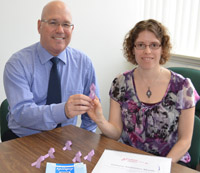
Susan Harrison, the executive director of the Epilepsy and Seizure Disorder Resource Centre for South Eastern Ontario, is pictured here with Leeds-Grenville MPP Steve Clark. Harrison was one of many epilepsy community advocates who met with politicians as part of Epilepsy Awareness Month.


Durham MPP John O’Toole sent Epilepsy Durham Region a letter thanking the agency for speaking with the Opposition party members. He emphasized the importance of having the most up-to-date information available to politicians.

“The material you provided about the need for an Ontario epilepsy strategy will be most helpful as health-care priorities for Ontario are considered in the legislature,” he wrote.

Asked about the best long-term result from the conversations with the government and Opposition, McKenzie doesn’t hesitate in her reply.

“(It would be to) have their unanimous support for the proposed Ontario epilepsy strategy, 100 per cent, across the board, all parties. That would be the ultimate goal,” she says.

On March 26, members of the Canadian Epilepsy Alliance gathered on Parliament Hill in Ottawa to celebrate the first anniversary of Purple Day legislation, which was initiated by Halifax West MP Geoff Regan.

“(Parliament) was a sea of purple,” says Epilepsy Ontario executive director Rozalyn Werner-Arcé, who attended the event. “I was so proud and am so appreciative of the support across all parties.”

If you have feedback on this story, or have a story of your own that you would like to share, please contact the newsroom at 800-294-0051, ext. 23, or e-mail deron(at)axiomnews.ca. You can also leave a comment below.

Writer: Deron Hamel

* If you wish to reprint this story, please include following notice: “This story originally appeared on the Epilepsy Ontario website.”


KPMG hosting lunch-and-learn to raise epilepsy awareness

March 21, 2013

Business advisory firm KPMG’s downtown Toronto office is hosting an employee lunch-and-learn March 22 to raise awareness of epilepsy and arm people with the knowledge necessary to foster conversations about seizure disorders.FRONTpurplethumb

This is one example of what private industry is doing in recognition of Epilepsy Awareness Month. The event is being organized by KPMG’s AdaptAbility Network, a group of team members that creates events advocating for people with disabilities. The lunch-and-learn will feature several speakers, including staff.

Olga Lapshinova, manager of global tax learning and development for KPMG’s Tax Business School and an AdaptAbility Network organizer, will tell her story of managing epilepsy for more than 10 years.

Gino Piazza, a KPMG director who also serves as Epilepsy Ontario’s treasurer, will speak about his connection with the organization.

Attendees will also hear from guest speaker Kelly Cvijanovich, who is the mother of two boys living with epilepsy. She will focus on the importance of employers understanding the challenges of staff members who are parents of children with epilepsy.

Epilepsy Ontario executive director Rozalyn Werner-Arcé will be dispelling some of the common myths about seizure disorders.

“We want people (to have a greater) understanding and to be more aware of what epilepsy is — that’s the whole point (of the lunch-and-learn),” says Lapshinova.

“If (staff members) know someone who has epilepsy, they will know how to respond, they will know what epilepsy is about and they will know that this is not something to dread.

“They will be able to react with a full conversation about epilepsy,” she says.

About 40 people have registered for the event, which Lapshinova says is “a very good response.”Thumbs Up Presentation with KPMG volunteers and Epilepsy Ontairo volunteers and staffPicture of EO volunteers and staff and KPMG volunteers giving the Thumbs Up for Epilepsy signal!

A highlight of Epilepsy Awareness Month is Purple Day. Held March 26, Purple Day is an international event aimed at raising epilepsy awareness.

KPMG will be participating in the Thumbs Up for Epilepsy campaign as part of Purple Day. A highlight of the campaign is encouraging people to paint their thumbnails purple to show support for epilepsy awareness.

Purple nail polish and purple ribbons will be available on every floor at KPMG’s office.

It’s estimated that one in every 100 Canadians is living with epilepsy. With such a high number of people living with the neurological disorder, most of us will know someone who has epilepsy or know someone who’s affected by it.

Werner-Arcé is commending KPMG for appreciating the diversity of employees, and she says she hopes other businesses follow the company’s example.

“KPMG is demonstrating great corporate leadership by hosting this awareness event,” says Werner-Arcé.

“Not only is management taking the time to educate themselves about epilepsy, but they are also showing, in a tangible way, that they are a caring employer who values their staff.”

If you have feedback on this story, or have a story of your own that you would like to share, please contact the newsroom at 800-294-0051, ext. 23, or e-mail deron(at)axiomnews.ca. You can also leave a comment below.

Writer: Deron Hamel

* If you wish to reprint this story, please include following notice: “This story originally appeared on the Epilepsy Ontario website.”

EpLink study focusing on improving children’s working memory

March 14, 2013

A study aimed at improving children’s working memory with a computer-based training program is being cited as one of the major highlights of EpLink, an epilepsy research program established by the Ontario Brain Institute (OBI).

From left to right, Dr. Jorge Borneo and Dr. McIntyre Burnham, co-directors of the OBI Epilepsy Research Project

EpLink co-director Dr. McIntyre Burnham says the study, which is led by Dr. Elizabeth Kerr, a clinical neuropsychologist at Toronto’s Hospital for Sick Children, shows a lot of promise for children living with epilepsy, who are often affected by challenges with working memory.

Working memory refers to the cognitive system that stores transitory information. Working memory helps us with verbal and nonverbal functions, such as reasoning and comprehension.

Few studies have taken aim at addressing working memory issues in people with epilepsy, says Burnham. Kerr, who brings more than 15 years’ experience working with children who have drug-resistant epilepsy, is illustrating a lot of innovation with her study, he adds.

The program at the centre of her research is similar to a computer game. The program takes about five weeks to complete and can be done by children at home, with coaching provided over the telephone.

Assessments of the children’s cognitive functioning are done at the beginning of the program, at the end of the program and then again four months after the program’s completion.

If Kerr’s research proves successful, Burnham says opportunities could arise to expand the computer-based training to more people.

“Although the study is presently taking place in Toronto, there is no reason why it couldn’t be done everywhere in Ontario if it is successful,” he says.

“It could be done with adults as well as with children, and it is possible that the phone counselling might be done by trained personnel at the nonprofit epilepsy associations.”

Kerr’s research isn’t the only EpLink study focused on developing computer technology to benefit people with epilepsy. One EpLink study is investigating computer programs used to help people with anxiety and depression to see if they could help people with seizure disorders.

The EpLink program is unique in Canada. It involves more than 25 researchers working at nine different university and hospital sites across Ontario. EpLink also encompasses five industry partners and five nonprofit advocacy groups.

On March 5, the province committed to injecting $100 million over five years to OBI, which, in turn, means five more years of EpLink funding.

If you have feedback on this story, or have a story of your own that you would like to share, please contact the newsroom at 800-294-0051, ext. 23, or e-mail deron(at)axiomnews.ca. You can also leave a comment below.

Writer: Deron Hamel

* If you wish to reprint this story, please include following notice: “This story originally appeared on the Epilepsy Ontario website.” 
$100-million OBI funding will help position Ontario as brain-research leader: Stuss

March 7, 2013

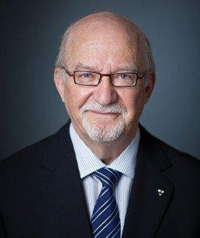
A $100 million, five-year provincial funding initiative provided to the Ontario Brain Institute (OBI) for research into neurological disorders, including epilepsy, Alzheimer’s disease, cerebral palsy, depression and autism, will help position the province as a worldwide brain-research leader, says Dr. Donald Stuss.

Dr. Donald Stuss
Dr. Donald Stuss

Stuss, OBI’s president and scientific director, says what makes this funding exceptional is that it will help further several ongoing neurological research projects that will “break down the silos between diseases” so they can be better understood.

This is unique, he says, because the research provided through the funding is helping enhance the way we understand epilepsy and other neurological diseases and the connections between them.

For example, a scientist involved with the project who is studying protein differences in epilepsy will be able to provide a standardized approach that researchers studying other diseases can adopt.

“Everybody will be gathering data in a standardized way, so that (researchers) will be able to study the mechanisms, comparisons and genetics (involved) in the unfolding of a disease,” Stuss tells Voices of Epilepsy.

“What we’re going to have is a transformed system of brain research that’s going to be at the leading edge of most places in the world.”

The result the scientists involved with the research are aiming for is to have a large platform of information on neurological disorders that can be compared with one another, says Stuss.

“What we have is the potential to truly start to dig down on the multiple factors that are key to the expression of a disorder,” he says.

“What we’re doing is probably broader in its scope and more in depth than most other places. We’re going to have increased improved treatments for virtually every (neurological) disorder, and those are going to come from the research projects that we’re doing.”

Stuss says it’s also beneficial to have the funding allocated over a five-year period because researchers will now have the resources to keep up to date with the latest scientific advances related to their area of study.

“People can say, ‘this has just popped up, let’s go after it,’ ” says Stuss. “When you have a grant, that’s a little harder to do.”

OBI issued research grants for more than 20 areas related to seizure disorders last spring. These include research into new medications, breakthrough diets and brain stimulation.

If you have feedback on this story, or have a story of your own that you would like to share, please contact the newsroom at 800-294-0051, ext. 23, or e-mail deron(at)axiomnews.ca. You can also leave a comment below.

* If you wish to reprint this story, please include following notice: “This story originally appeared on the Epilepsy Ontario website.”

Writer: Deron Hamel