Author Archives: eCreative Studios

Agencies partner on flower campaign to raise epilepsy awareness

August 28, 2013

If you’re looking to brighten your home or give someone a nice gift while supporting a good cause, look no further than your commute on the Toronto subway this week.

Epilepsy Ontario and Epilepsy York Region are collaborating on a fundraising initiative until Aug. 30 to raise money for their organizations while educating the public about seizure disorders by selling flowers at Kipling and Finch subway stations, respectively.
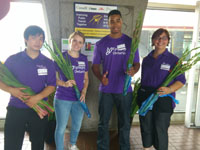
Epilepsy Ontario and Epilepsy York Region representatives are selling gladioli at two Toronto subway stations this week.

The initiative is part of Epilepsy York Region’s Glad Days for Epilepsy campaign, which is held every August.

From 2 p.m. to 7 p.m., representatives from the agencies are selling gladioli — commonly called “glads” — and sunflowers, with the goal of raising $5,000.

Several Ontario epilepsy agencies sell flowers throughout August to raise money and awareness.

As part of Glad Days for Epilepsy, Epilepsy York Region sells gladiolas at several locations in Greater Toronto. The flowers are provided to the agencies by a local grower who sold them at a discount.

Jeanette Schepp, Epilepsy Ontario’s resource development co-ordinator, says the agencies chose to sell the flowers at the subway stations because they “want to reach as many people as possible.” More than one million people ride Toronto’s subway every day.

“Raising awareness is always the best outcome we can look for, but raising funds (is important) because we continuously need to reach out to the population so there is a better awareness of epilepsy,” Schepp says.

“We’re selling the flowers, but we’re also sharing information about what epilepsy is and about first-aid seizure control and other information. . . . It’s a great opportunity to connect with people.”

Schepp says the success of the recent ScotiaBank BuskerFest is giving her a strong sense of hope for outstanding support for the gladioli initiative. BuskerFest is the world’s largest epilepsy awareness event and the world’s largest street performer festival. Held on Yonge Street Aug. 22-25, the annual event is organized by Epilepsy Toronto and proceeds support the agency.

While selling the flowers, representatives from the agencies will have printed material on hand to share with commuters and they will explain the importance of the public’s support.

“Hopefully, we will get some people who have had exposure to understanding what epilepsy is — and for those who don’t, we’re going to make sure they understand what epilepsy is,” Schepp says.

Writer: Deron Hamel

If you have feedback on this story, or have a story of your own that you would like to share, please contact the newsroom at 800-294-0051, ext. 23, or e-mail deron(at)axiomnews.ca. You can also leave a comment below.
Petition launched to begin CBD trials in Canada

August 22, 2013
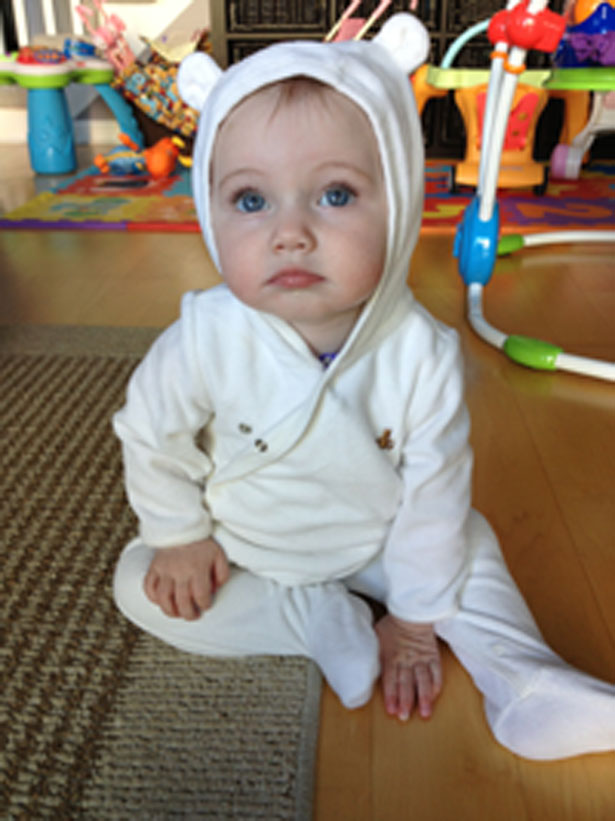
Kaitlyn Pogson is living with Dravet syndrome. Her parents have started an online petition to Health Canada for clinical trials to be conducted on CBD.

Ten-month-old Kaitlyn Pogson is living with Dravet syndrome, a rare catastrophic form of intractable epilepsy that causes her to go into hour-long seizures every few days. When this happens, Kaitlyn must be rushed to hospital where she’s administered anti-seizure medication that has little impact and often produces side effects, such as reduced appetite.

Her parents, Barry and Shannon, say there’s hope to end the nightmare their daughter lives with, but they need Health Canada to approve a substance derived from the cannabis plant for clinical trials.

It’s for this reason the Pogsons have launched an online petition aimed at making Health Canada’s office of controlled substances aware of the benefits of Cannabidiol (CBD) on children who are living with a seizure disorder. https://www.change.org/en-CA/petitions/make-cannabidiol-cbd-available-in-canada

Specifically, the petition has three main objectives: to encourage Health Canada to allow the specific strains of cannabis plants needed for CBD production to be imported from the U.S., to allow medical trials to be conducted in Canada, and to expedite the process of accessing CBD.

CBD comes from the flower of the cannabis plant, which is causing stumbling blocks for those advocating for its study in clinical trials. CBD is not legal in Canada, nor is it legal in the U.S. at the federal level.

The substance is produced by soaking the flower in alcohol, which is then boiled off. Olive or sesame seed oil is then added to the remaining residue. The CBD oil mixture can then be administered by stirring it into food.

Barry says CBD treatment could have a huge positive impact on the quality of life for children and adults with seizure disorders.

He says he remains hopeful about CBD eventually becoming a widespread intervention for children with seizure disorders. He points to Dr. Orrin Devinsky of New York University receiving Federal Drug Administration approval to conduct a study on the safety of CBD in children living with a seizure disorder as hope for what’s around the corner.

Epilepsy Ontario executive director Rozalyn Werner-Arcé says that while the organization is not endorsing CBD as a treatment for catastrophic seizures, “as the voice of epilepsy in this province, we believe Epilepsy Ontario has a responsibility to inform people about new research and treatments so that they can make informed decisions with their health-care provider.  We do this through stories such as these and through information on topics such as CBD on our website.”

Writer: Deron Hamel

If you have feedback on this story, or have a story of your own that you would like to share, please contact the newsroom at 800-294-0051, ext. 23, or e-mail deron(at)axiomnews.ca<http://axiomnews.ca>. You can also leave a comment below.

* If you wish to reprint this story, please include following notice: “This story originally appeared on the Epilepsy Ontario website.”

Golf tourney raising money to send kids with epilepsy to camp

August 14, 2013

This year’s Richardson Charity Golf Tournament will once again be an opportunity to help send children and youths living with epilepsy to summer camp, while having a fun day on the fairways and greens at Ariss Valley Golf Club near Guelph.

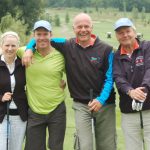
Terra Richardson, Ian Richardson, Onno van Buren and Gary Meers are all smiles at the 2011 charity golf tournament.


All proceeds from the Aug. 24 event will support Summerfest, an annual summer camp held at Camp Couchiching near Orillia that’s sponsored by Epilepsy Ontario. The camp helps children and youths living with epilepsy enjoy a summer camp experience with appropriate nursing care.

The tournament was launched by chief organizer Ian Richardson and his family in honour of his father who lived with epilepsy. Since its 2006 launch, the tournament has raised about $35,000. Each year the event aims to raise about $5,000.

Richardson explains what he likes best about the tournament.

“This is an opportunity for everyone to get together for a good cause, and it’s good to know that everything we make is going to help benefit some kids who might be going through a tough time,” he says.

“(Summerfest) gives (campers) an opportunity to develop and grow just like everyone else.”

Richardson adds that, for him, it’s especially important the money raised goes towards helping children living with epilepsy.

He notes that his father developed epilepsy as an adult and as challenging as the disorder was for his dad, “for a child to be going through something like that would be a very tough situation.”

During each tournament, Richardson meets a lot of new faces and he says one thing surprises him every year.

“You start to realize how many people either have a family member or a friend who has epilepsy,” he says. “There are a lot more people that have it than you realize.”

When the first tournament was held, most participants were the Richardson family members and some close friends. With each tournament came more people; at first friends of friends, then expanding to others.

Eventually, corporate sponsors came on board, including Suncor, Rogers Communications Inc., Burger King and several others.

The cost for playing in the tournament is $100, which includes green fees, a cart and a buffet dinner.

Click here to register for the tournament or to donate.

Writer: Deron Hamel

If you have feedback on this story, or have a story of your own that you would like to share, please contact the newsroom at 800-294-0051, ext. 23, or e-mail deron(at)axiomnews.ca. You can also leave a comment below.
Summerfest building self-confidence, independence for camp goer

August 7, 2013

Tracy Cummins admits to having reservations the first time her son, Tobin, went to Summerfest in 2011. After all, he was only eight years old, had never been away from home by himself and had never been to camp. Tracy had also always been the person who administered medicine for Tobin’s seizure disorder.

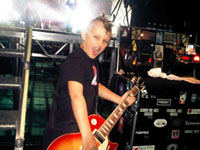
Tobin Kravchenko is seen here backstage at a Foo Fighter’s concert tuning singer-guitarist Dave Grohl’s Gibson Les Paul.

Tobin’s time at the camp went off without a hitch. In fact, the then-eight-year-old returned home with more self-confidence than he had ever had and was showing increasing independence, Tracy says, adding her son has looked forward to Summerfest ever since.

“(Summerfest) is exciting for him; Tobin is a really independent kid, so he just loves the idea of being parent-free and having a good time out in nature,” Tracy says.

Tobin’s interpersonal skills have also been enhanced by attending Summerfest, Tracy notes.
 
“He is more self-confident and he’s very comfortable in different groups of kids; he doesn’t need to be around kids that he’s familiar with to be able to have a good time, and I think a lot of that comes from being a camp kid,” she says.

In fact, Tobin chooses the weeks he wants to attend Summerfest, picking different time slots each year so he can meet new campers, Tracy points out.

Aside from the personal development Tobin has experienced from attending Summerfest, Tracy says she has also benefite

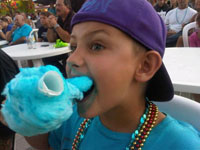
Tobin Kravchenko is seen here at the Canadian National Exhibition in Toronto.

d from her son attending the camp.

“I don’t worry about him (now) when he’s on his own because he really has his head on his shoulders,” she says.

Tobin will be attending Summerfest for two weeks starting Aug. 11. As a testament to how much Tobin enjoys the camp, Tracy says it takes him a long time to complete his application form — there are just too many activities offered that interest him.

“He’s just so excited about it,” she says.

Summerfest was founded in 1994 by Anita Allen, a neurology clinic nurse at Toronto’s Hospital for Sick Children (SickKids). The program, which is held at Camp Couchiching, near Orillia, enables children aged six to 15, who are living with seizure disorders, to attend camp with other children.

Summerfest also provides respite to parents and gives them a chance to spend time with each other or with their other children. Since the camp has experienced counsellors and offers on-site nursing professionals who are well-versed in working with people who have seizure disorders, parents enjoy peace of mind knowing their children are safe and in good hands.

If you would like to donate to the Summerfest camp program, please click here.

Writer: Deron Hamel

If you have feedback on this story, or have a story of your own that you would like to share, please contact the newsroom at 800-294-0051, ext. 23, or e-mail deron(at)axiomnews.ca. You can also leave a comment below.
* If you wish to reprint this story, please include following notice: “This story originally appeared on the Epilepsy Ontario website.”