
Author Archives: eCreative Studios

Scotiabank marathon a powerful engagement tool for epilepsy agencies

October 17, 2013

Epilepsy Ontario’s participation in the Oct. 20 Scotiabank Toronto Waterfront Marathon is more than a fundraiser; it’s also an opportunity for people to connect and enhance large-scale awareness of the neurological disorder, says Gino Piazza.
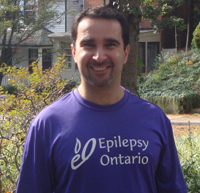
Gino Piazza
Gino Piazza


Piazza, Epilepsy Ontario’s president, characterizes the marathon as an opportunity for people living with epilepsy and their families to come together as a community and “raise the voice of epilepsy.”

He has also been successful at getting others involved in this year’s marathon, signing up four of his co-workers at KPMG.

Piazza says his passion for helping Epilepsy Ontario with its fundraising and awareness initiatives stems from positive first-hand experiences he and his family had with the organization after his youngest sister was diagnosed with epilepsy.

“The organization was amazing to us when she was first diagnosed,” he says. “They helped us navigate the very convoluted waters of epilepsy treatment and care, and they gave us the information that we needed.”

Epilepsy Ontario and Epilepsy York Region have teamed up for this year’s marathon, with 30 runners representing the agencies. Other epilepsy support agencies have also entered this year’s marathon, an annual event that sees thousands of people running through Toronto to raise money and awareness for a myriad of causes.

Following the event, Epilepsy Ontario, Epilepsy York Region and Epilepsy Halton Peel Hamilton will be hosting a thank-you party for participants.

Money raised from the marathon will be put towards services, education and support for people living with epilepsy and their families.

With approximately one in every 100 Canadians living with epilepsy, most people are connected to someone in some way who has a seizure disorder, says Epilepsy Ontario resource development co-ordinator Jeanette Schepp, adding this is evidenced by the significant number of people once again travelling from outside of the Greater Toronto Area to participate in this year’s marathon.

Schepp says participation in the Scotiabank Toronto Waterfront Marathon is a vital tool for fostering epilepsy awareness and raising the profile of agencies providing supports to people affected by seizure disorders.

“It really allows us to . . . raise the voice of epilepsy, not only in Toronto, but almost on a worldwide basis because it does get significant media exposure,” she says.

To sponsor any of the participating epilepsy agency teams including Epilepsy Ontario, Epilepsy Halton Peel Hamilton, Epilepsy York, and Epilepsy Toronto, click here.

Click here for more information on the 2013 Scotiabank Toronto Waterfront Marathon.

Writer: Deron Hamel

If you have feedback on this story, or have a story of your own that you would like to share, please contact the newsroom at 800-294-0051, ext. 23, or e-mail deron(at)axiomnews.ca. You can also leave a comment below.


Hard-hitting epilepsy documentary aims to broaden awareness

October 10, 2013

A documentary screening in Toronto this month will provide viewers a first-hand glimpse of what it’s like to live with epilepsy and hoOntheEdge_smallw seizure disorders can alienate people, lead to anxiety and depression and create a detrimental impact on lives.

This may sound unsettling but that’s exactly the reaction people need to have to better understand the challenges those living with epilepsy face, to break down stigma, and to raise awareness of its seriousness beyond the community of people affected by seizure disorders, clinicians, researchers and support agencies, says Rozalyn Werner-Arcé.

Werner-Arcé, Epilepsy Ontario’s executive director, adds that while everyone could take something away from seeing On the Edge: Living with Epilepsy, it would be especially beneficial to people who do not have epilepsy and do not know someone with the neurological disorder.

This is because of the impact epilepsy and seizure disorders have on people; how it affects employment, education and personal lives goes beyond the individual – it affects family, friends, educators, co-workers and others that they may interact with.

Seeing the documentary will help people better understand those struggles, and how every one of us can play a part in building awareness and support for individuals living with epilepsy, she says.

On the Edge: Living with Epilepsy was written and directed by Louis Stanislaw, a U.S. filmmaker who has epilepsy. The film is told through his eyes and also shares the stories of people who have epilepsy and their families.

It tells the painful truths, misunderstandings, and difficulties of living with epilepsy at every turn; from family life to school, to leaving home, and starting a career and forming lasting bonds.

The documentary also highlights the medical and social progress being made.

For people who are affected by epilepsy, the film sends the message that there is a large community of people dealing with the same issues as themselves — and that’s a good thing, Werner-Arcé says.

“By knowing that there is a community of people with epilepsy out there, and that support is available through local epilepsy agencies, it helps build strength and resilience for those facing difficult challenges and isolation,” she says. “(The film will also help) bring voices together around advocacy and break down stigma.”

On the Edge: Living with Epilepsy will have its Canadian premiere screened at St. Michael’s Hospital’s Li Ka Shing Knowledge Institute on Oct. 23. The screening will include a facilitated conversation with Stanislaw as well as with researchers, clinicians and other guests. A reception will follow.

The screening is free but people need to register. To register, click here, then scroll down the page and click the “reserve tickets” button.

Click here for more information about the documentary.

Writer: Deron Hamel

If you have feedback on this story, or have a story of your own that you would like to share, please contact the newsroom at 800-294-0051, ext. 23, or e-mail deron(at)axiomnews.ca. You can also leave a comment below.
Why hiring people with epilepsy makes good business sense

October 2, 2013

Employers who make a point of hiring people with epilepsy are not just doing the right thing; they’re making a smart business decision, says employment consultant Tim Nourse.

Employment200The reason for this is simple, Nourse says: by hiring people with epilepsy and other seizure disorders, employers are creating a more diverse workforce that is “more responsive to marketing and social needs.”

Many people living with epilepsy are frightened to disclose their condition to their employers or workmates out of fear that it could cost them their job. While Nourse says some employers continue to be wary of hiring people with seizure disorders out of concern that their condition will negatively affect their jobs, others are actively seeking people with disabilities — including epilepsy.

This is especially true for companies, such as banks, where there are federal regulations mandating employers to hire a certain number of people with disabilities every year.

“I’ve often coached clients to not disclose in their covering letter that they have epilepsy, but to indicate that they are a person with a disability and they are applying as per the (employer’s) instructions or wish to be considered as an under-represented part of the population,” Nourse says.

“You can secure an advantage. . . . In some cases, for people to say, ‘I wish to be considered as a candidate with a disability’; that’s actually putting a little gold star beside their application or their resumé.”

Nourse says federally regulated employers, typically, do not have difficulty meeting their targets for hiring First Nations people, visible minorities and women. Where they have challenges is meeting their targets for hiring people with disabilities.

There’s also a push in today’s society for employers to have inclusive hiring practices. By having hiring policies that announce their willingness to hire people with disabilities they are increasing the diversity in their workplace and showing themselves to be socially responsible companies.

In other words, says Nourse, it just makes good business sense.

“Employers are recognizing all the time that it’s not the right thing to hire somebody with epilepsy, it’s the smart thing to do – you’re creating a more diverse workforce that’s more responsive to marketing needs and social needs; you’ll have a better understanding,” he says.

Writer: Deron Hamel

If you have feedback on this story, or have a story of your own that you would like to share, please contact the newsroom at 800-294-0051, ext. 23, or e-mail deron(at)axiomnews.ca. You can also leave a comment below.

[Event] On The Edge: Living with Epilepsy

October 1, 2013

OntheEdge

May 21 – National Arts Centre, Ottawa, ON

June 5 – Abilities Centre, Whitby, ON

June  12 – London Convention Centre, ON

Building on the success of the October 2013 Canadian premiere screening, Epilepsy Ontario is proud to announce the Road Tour of the documentary, On the Edge: Living with Epilepsy with additional screenings in Ottawa, Durham Region (Whitby) and London.  On the Edge: Living with Epilepsy is a powerful and enlightening documentary shared through the eyes of the filmmaker, Louis Stanislaw, and people who live with epilepsy and their family members. 

After the screening of the film, we will have a panel discussion to explore epilepsy from a variety of perspectives.  

Please join us in this important awareness and educational event.   For more details click here:

We would love to see you there!