
Author Archives: DHamel

Efforts underway to help people living with epilepsy affected by Alberta wildfire

May 12, 2016

By Deron Hamel

Edmonton Epilepsy Association is part of a consolidated emergency support team to help people displaced by the wildfire that continues to impact northern Alberta, near the town of Fort McMurray.
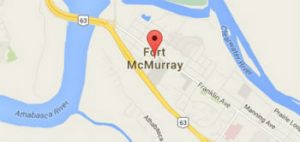
FtMcMurray350The agency has been finding accommodation in private homes for people with epilepsy and their families since the town was evacuated May 3, two days after the fire started southwest of Fort McMurray.

Assistance is being provided by the agency’s directors, staff and members who have knowledge of epilepsy and how to deal with seizures and other elements of the condition, says Gary Sampley, the Edmonton Epilepsy Association’s executive director.

“We believe that those Fort McMurray individuals with epilepsy will feel more comfortable and at ease knowing that there is already knowledge, caring and understanding in their temporary accommodation,” he says.

One of the major concerns for people with epilepsy affected by the wildfire has been access to medication. The good news is that people needing epilepsy medication have been getting it, Sampley says.

“There are select pharmacies working with Alberta Health Services and people are being directed to those pharmacies once they indicate to the evacuation organizing committee what their needs are,” Sampley says.

The Edmonton Epilepsy Association has registered with the evacuation organizing committee, and any questions related to the specific needs of people with epilepsy are being directed to the agency. Questions about epilepsy medications are being directed either to the Edmonton Epilepsy Association or to the pharmacies that have been recruited by the Alberta government.

“I’m surprised at just how organized it is,” Sampley says.

To date, the fire has displaced an estimated 90,000 people in Fort McMurray and the surrounding area. Since about one in every 100 Canadians is living with epilepsy, Sampley points out about 900 living with the condition have been affected by the wildfire.

Seizure and Brain Injury Centre executive director Rhonda Latendresse knows firsthand the impact fire can have on a community. She experienced the 2012 forest fire in Timmins, Ont., which burned for five months.

She recently sent her support in an e-mail to the Edmonton Epilepsy Association.

“As someone who lived through the fifth largest forest fire here in Timmins, my heart goes out to them,” she wrote. “What I experienced is nothing compared to what these people are going through.”

Anyone wishing to donate to the relief effort can do so through the Canadian Red Cross.

If you have feedback on this story, or have a story of your own that you would like to share, please contact the newsroom at 1-800-294-0051, ext. 23, or e-mail deron(at)axiomnews.ca. You can also leave a comment below.
This year’s Summerfest Sail Away expected to be the largest yet

May 5, 2016

By Deron Hamel

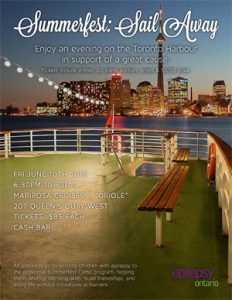
The third annual Summerfest Sail Away Cruise is expected be the event’s largest gathering yet, with organizers anticipating more than 75 people coming aboard to sail the coast of Lake Ontario on June 10.

EO300The cruise raises money each year to help send children living with epilepsy to Summerfest Camp if their families require financial assistance.
John Cvijanovich, the cruise committee’s chair, says attendees can expect some changes for this year’s cruise.

People attending the Summerfest Sail Away Cruise this year will have an entire ship to themselves. The event has also been moved to a Friday night, which is expected to attract more people.

Organizers are hoping to raise between $4,000 and $5,000 this year.

Cvijanovich says last year’s cruise was a success, with about 60 people attending. He notes that the cruise committee is hoping to build upon that success.

“We had a lot of positive feedback and great reviews last year,” he says. “For this year, we’re looking for a big increase in the number of people.”

For 22 years, Summerfest Camp has seen an average of 20 to 40 children and youth attend each session, where they participate in activities such as hiking, kayaking and sports at Camp Couchiching, near Orillia.

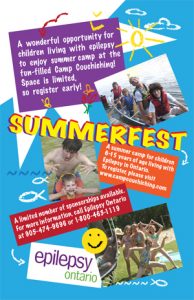
Summerfest Camp enables children aged six to 15 who are living with seizure disorders to attend camp with other children. The camp provides a setting where children can forget about their epilepsy and enjoy a camping experience with others.

The Summerfest Sail Away cruise, which includes a buffet dinner, dancing, silent auction, 50-50 draw and door prizes, will coast along Lake Ontario’s shoreline for 3 ½ hours on June 10.

The cruise will set sail from the docks at Mariposa Cruises at 207 Queens Quay West, Toronto, at 6:30 p.m. and return at 10:30 p.m.

Tickets can be purchased online by clicking here.

If you have feedback on this story, or have a story of your own that you would like to share, please contact the newsroom at 1-800-294-0051, ext. 23, or e-mail deron(at)axiomnews.ca. You can also leave a comment below.

Camp Couchiching offering a 3-day experience for children to ‘fall in love’ with Summerfest

April 28, 2016

Deron Hamel

summerfest15(P)Camp Couchiching is offering a unique opportunity to children and youths living with epilepsy who want a taste of what Summerfest Camp is like without committing to full two-week programs.

The three-day “mini Summerfest Camp” is being held over the Victoria Day weekend, May 21-23.

The opportunity also helps alleviate anxieties for parents who may have concerns about leaving their children for extended periods of time, says Oona Ashmore, summer camp director at Camp Couchiching, where Summerfest Camp has been held every year since 1994.

Summerfest Camp has nurses and counsellors who have training in working with people with seizure disorders. The major aim of the program is to provide a camping experience for children with epilepsy in an environment where they can be themselves and their parents can take comfort in knowing their children are in safe hands.

Ashmore characterizes the weekend Summerfest Camp as a “smaller version of the summer camp.” She says she has seen many children participate in the three-day camp and enjoy it so much they sign up for a two-week session in summer.

“It’s an opportunity for kids and their families to fall in love with the camp,” Ashmore tells Voices of Epilepsy. “For families who have children with medical uncertainties, it’s a really nice opportunity to see their kids come back with really great, exciting stories about how much they liked camp.

“And the parents hear how the staff is responsible and were paying attention to the kids’ needs, which makes the parents more comfortable.”

Summerfest Camp enables children aged six to 15 who are living with seizure disorders to attend camp with other children. The camp provides a setting where children can relax and have a good time. While at the camp, the children participate in activities such as swimming, hiking, kayaking and sports.

This year, the Summerfest Camp’s summer program will be offered in five sessions:

Session 1: July 3-15
Session 2: July 17-29
Session 3: July 31-Aug. 12
Session 4: Aug. 14-26
Session 5: Aug. 28-Sept. 2 (one-week session)

To ensure as many children as possible can attend Summerfest Camp, Epilepsy Ontario provides a limited number of sponsorships for families who require financial assistance. The sponsorship request form can be found on the Epilepsy Ontario website.

If you have feedback on this story, or have a story of your own that you would like to share, please contact the newsroom at 800-294-0051, ext. 23, or e-mail deron(at)axiomnews.ca. You can also leave a comment below.

Peterborough woman hoping to write book about persevering with epilepsy

April 14, 2016

By Deron Hamel

At Toronto Western Hospital, Kerry Jenkins is known as the “walking textbook on epilepsy.”

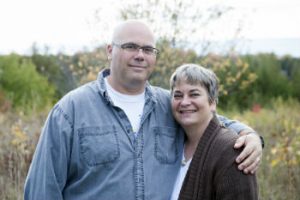
Kerry Jenkins is seen here with her husband, James.

Given her incredible story of perseverance, her doctors, as well as people at Epilepsy Toronto, have suggested Jenkins write a book about her struggle with epilepsy and the strides she has gained.

Now 47 and living in Peterborough, Jenkins began having absence seizures at seven, with up to 100 per day. Because these episodes only lasted two or three seconds and looked like quick pauses, her parents didn’t know they were seizures. It wasn’t until several years later she was examined by a physician for her seizures.

In August 2000, Jenkins had her first tonic-clonic seizure. The seizures progressed to an average of 15 per month. She was diagnosed as having both generalized seizures and temporal-lobe seizures.

For Jenkins, like so many others with epilepsy, life has been a road with many obstacles. Her marriage ended because of her condition, which also strained her relationship with one of her children. She lost her driver’s licence because of her epilepsy, which presented transportation challenges for her, as she was living in Lindsay at the time and had to travel more than 40 kilometres to her job in Peterborough every day.

With the challenges presented by her condition adding up, Jenkins says she saw little hope for the future. Clinical depression set in and became so severe that on two occasions she almost committed suicide.

Then things changed.

In November 2010, she had an electroencephalogram (EEG) to examine her temporal lobe. Thirteen months later, upon recommendation from her neurologist, Dr. Richard Wennberg, Jenkins underwent deep brain stimulation (DBS) surgery. This operation involves implanting a “brain pacemaker” which sends electrical impulses to the brain.

Prior to the DBS surgery Jenkins was on several medications, but she was having allergic reactions and severe side effects – including glaucoma and asthma – to most medications.

The DBS surgery, says Jenkins, was the major game-changer in her life. Since the surgery, the number of seizures Jenkins experiences has declined from 15 to eight per month, with no more generalized seizures.

In March, Jenkins had to have surgery again. This time it was to repair issues from her first operation, which had left burr holes that did not fill with calcium, causing her brain membrane to slip into them. This caused the leakage of cerebral fluid which was resulting in severe headaches and light and sound sensitivity.

The incidence of this happening is less than one per cent and her doctors had never dealt with this issue, Jenkins says.

Fortunately, the surgery was a success, and Jenkins continues to soldier on.

“I’m used as an example to other patients and family as how much someone can have to go through with epilepsy,” Jenkins says. “My (team at Toronto Western Hospital) has encouraged me to write a book about what I have gone through. They have told me that I have the best attitude they have ever seen.”

Jenkins is interested in writing a book to share her story and is looking for someone to help her with the writing and editing process. If you or someone you know is interested in helping, Jenkins would like to hear from you. She can be reached at 705-930-6146, or by e-mail at kjenkins2008(at)hotmail.com.

If you have feedback on this story, or have a story of your own that you would like to share, please contact the newsroom at 800-294-0051, ext. 23, or e-mail deron(at)axiomnews.com. You can also leave a comment below.