
Author Archives: DHamel

Inspirational stories of overcoming challenges posed by epilepsy have highlighted 2016

August 4, 2016

By Deron Hamel

One goal Epilepsy Ontario aims for through its news program, Voices of Epilepsy, is to highlight people who have not allowed living with a seizure disorder to hold them back from pursuing their dreams and ambitions. So far in 2016, we have seen many of these stories.

Brock Welton

Brock Welton (far left), joined TOROS, a North Bay inclusive community theatre group for young people, in 2015.

In January, we highlighted the story of Brock Welton, a 22-year-old man living with Dravet syndrome, a catastrophic form of intractable epilepsy. Last year Brock joined TOROS, a progressive and inclusive community theatre for young people, which has had a profoundly positive impact on his life.

His mother, Jo-Anne, says Brock was “very quiet” when he began participating with TOROS, but in short time this changed. The other TOROS members empowered Brock, encouraging him to take an active role in the spotlight and to participate in their song and dance numbers.

Eventually Brock thrust himself into the action; he attended rehearsals and began performing on stage, an aura of self-confidence surrounding him. No evidence of the shy young man who once stood at the side of the stage remains.

“Now, you need a hook to get him off the stage,” Jo-Anne chuckles. “He just loves it.”

The confidence Brock exudes today has grown beyond his work with the theatre group, Jo-Anne says.

“I find he is so much more self-driven, and I have had to adjust to this because I was always so used to doing everything for him,” she says. “My role has changed from being someone who is his total caregiver to him telling me what he wants to do with his life, and I am trying to accommodate him.”

Kerry Jenkins

Peterborough resident Kerry Jenkins first began having up to 100 absence seizures per day at seven. In August 2000, she had her first tonic-clonic seizure. The seizures progressed to an average of 15 per month. She was diagnosed as having both generalized seizures and temporal-lobe seizures.

Kerry Jenkins is seen here with her husband, James.

For Kerry, like so many others with epilepsy, life has been a road with many obstacles. Her marriage ended because of her condition, which also strained her relationship with one of her children. She lost her driver’s licence because of her epilepsy, which presented transportation challenges for her, as she was living in Lindsay at the time and had to travel more than 40 kilometres to her job in Peterborough every day.

Since a series of successful surgeries that began in 2010, Kerry’s seizures have sharply declined and she no longer suffers from generalized seizures. Given all that she has gone through, her doctors at Toronto Western Hospital have taken to calling her a “walking textbook on epilepsy.”

They have even encouraged her to tell her story.

“I’m used as an example to other patients and family as how much someone can have to go through with epilepsy,” Kerry says. “My (team at Toronto Western Hospital) has encouraged me to write a book about what I have gone through. They have told me that I have the best attitude they have ever seen.”

Rob Jamieson

Last November, Rob Jamieson, a 21-year veteran of the Ontario Provincial Police (OPP), was elected to a two-year term as president and CEO of the union representing 9,200 uniformed officers and civilians working for the police force. He is also living with epilepsy.

Ontario Provincial Police Association president and CEO Rob Jamieson

His position with the Ontario Provincial Police Association (OPPA) is the result of many years of hard work and support from his family, friends and OPP colleagues. He is also an example of how people living with epilepsy should not let their condition stand in the way of their aspirations. This is the message he wants to send to people living with epilepsy.

“I want that young kid who has epilepsy to read this and be inspired; I want to reduce the stigma (of epilepsy),” says Rob, who has not had a seizure since 2004.

Rob says if asked 10 years ago if he envisioned himself as head of one of the largest police unions in Canada, his answer would have been no. However, he is committed to helping others, so it’s not a complete shock either.

“Did I see myself specifically in this position? No. But did I see a role something like this, or did I see something like this happening through hard work and support? Yeah, anything is possible, as long as I am in that role of helping others,” he says.

Do you have a story to share about overcoming challenges related to epilepsy? If so, we’d like to hear from you. Please contact the newsroom at 1-800-294-0051, ext. 23, to share your story.

If you have feedback on this story, or have a story of your own that you would like to share, please contact the newsroom at 1-800-294-0051, ext. 23, or e-mail deron(at)axiomnews.com. You can also leave a comment below.
Epilepsy Ontario to directly fund research for first time in 50-year history

July 28, 2016

By Deron Hamel

For the first time in its 50-year history, Epilepsy Ontario will be directly funding epilepsy research aimed at enhancing quality of life for people living with the condition.

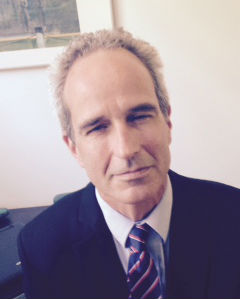
Sean O'Malley
Sean O’Malley

Thanks to a private donation made to the agency, Epilepsy Ontario will be collaborating with leading epilepsy researchers in the province to conduct several studies. These include:

– The largest music therapy clinical trial ever conducted in Canada
– A first-of-its-kind study aimed at improving the long-term chances of success for brain surgery patients
– Partnership in a study using cutting-edge MRI technology to better understand the inner working of the brain

As a direct result of the funding, Epilepsy Ontario has entered into formal partnerships with world-class Ontario research institutes including EpLink, the Epilepsy Research Program of the Ontario Brain Institute, and the Krembil Neuroscience Centre at Toronto Western Hospital.

Sean O’Malley, who has served on Epilepsy Ontario’s board of directors, has been hired as the research program’s administrator.

While all the research Epilepsy Ontario will be funding is promising, O’Malley says he finds the music therapy study to be most fascinating. Music therapy, he notes, has been shown to be effective in improving quality of life for people with other neurological conditions, such as Alzheimer’s disease.

The study is currently under clinical review, and research is expected to begin in September with results published in the next two years.

“There has never been a clinical trial on music therapy for people with epilepsy done in Canada,” O’Malley tells Voices of Epilepsy. “That’s really exciting.”

As research administrator, O’Malley will be the key contact between Epilepsy Ontario and the researchers. He will also be keeping track of timelines and spearheading media relations and educational outreach programs connected to the research.

O’Malley, who has spent his career as a journalist, says his new position is a chance to marry his storytelling strengths with his passion to help people living with epilepsy. His daughter, Rhiannon, is living with the condition, so he is looking at his new role as an opportunity to help her.

“This is something I have such a personal connection to … and is something I find hugely satisfying – to be able to use my storytelling skills for something that could improve the lives of people like my daughter,” he says.

If you have feedback on this story, or have a story of your own that you would like to share, please contact the newsroom at 800-294-0051, ext. 23, or e-mail deron(at)axiomnews.com. You can also leave a comment below.

Westmount Gardens wins Epilepsy Support Centre’s Purple Day Challenge

July 21, 2016

By Deron Hamel

Westmount Gardens, a London, Ont. long-term care home, is the winner of the Epilepsy Support Centre’s 2016 Purple Day Challenge, an annual contest where seniors’ care homes raise epilepsy awareness.

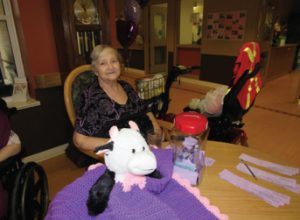
Westmount Gardens resident Marguerite Sivak is pictured here with the "purple buddy" she made for the London, Ont. long-term care home's Purple Day Challenge.
Westmount Gardens resident Marguerite Sivak is pictured here with the “purple buddy” she made for the London, Ont. long-term care home’s Purple Day Challenge.

Now in its second year, the Purple Day Challenge was launched to recognize the increasing prevalence of epilepsy in the senior population as the baby boomer generation ages.

Recognized every March 26, Purple Day was launched in 2008 by Cassidy Megan, a then-nine-year-old Nova Scotia girl who was diagnosed with epilepsy when she was seven. Cassidy had one goal for Purple Day: for people to come together globally to learn about epilepsy to reduce its stigma.

On Purple Day, Westmount Gardens hosted a variety of activities focused on epilepsy awareness. A speaker was also brought in from the Epilepsy Support Centre to give an information session on epilepsy and seizures.

The long-term care home’s residents and staff members were encouraged to wear purple, and there was also a purple jelly-bean count and epilepsy trivia. The centrepiece of the day’s activities was a “purple buddy,” a purple blanket knitted around a stuffed toy cow that was made by resident Marguerite Sivak.

There was also an abundance of information pamphlets about epilepsy and seizures that was distributed to residents, staff members and visitors.

“We had a lot of resident involvement and we had great support from residents and staff on Purple Day,” says Connie Redmond, Westmount Gardens’ life enrichment manager, noting there are residents at the home who are living with epilepsy.

Jeremy McCall, the client services manager for the Epilepsy Support Centre, says the agency is impressed with the effort Westmount Gardens put into the Purple Day Challenge.

“Westmount Gardens really blew us away as they rose head and shoulders above the competition in terms of breadth, depth, and variety of events and opportunities for their residents to become involved, learn, ask questions and enjoy themselves,” he says.

“We are honoured to have their support, and sincerely congratulate them for their win.”

The Epilepsy Support Centre and Westmount Gardens will be having a celebratory party in the near future to recognize the home for its hard work raising epilepsy awareness.

If you have feedback on this story, or have a story of your own that you would like to share, please contact the newsroom at 800-294-0051, ext. 23, or e-mail deron(at)axiomnews.com. You can also leave a comment below.

Spy-themed gala raising money to support people with epilepsy

July 14, 2016

By Deron Hamel

Epilepsy Ontario and EpLink are teaming up to host the organizations’ first annual Brain Benefit Ball to raise money in support of people living with epilepsy.

Shaken350The event, called the Shaken, Not Stirred gala, will be held in Toronto Oct. 20 and will feature a James Bond theme that promises “an evening of mystery and intrigue” in the form of spy-themed table challenges. The black-tie event also includes a martini cocktail reception, a three-course meal and a silent auction.


This is the first time both organizations have partnered on a large-scale fundraising event. Money raised will be split 50-50 between the organizations.

“Fifty per cent of the money raised will fund EpLink’s world-class epilepsy research in Ontario, and the other 50 per cent will be used by Epilepsy Ontario to support our information and advocacy program,” explains Epilepsy Ontario executive director Paul Raymond.

Raymond adds that the collaboration between Epilepsy Ontario and EpLink, the Ontario Brain Institute’s (OBI’s) epilepsy research program, is an important partnership.

“For both organizations, (the event represents) the important role of epilepsy care and epilepsy research working together, instead of in separate silos,” he says.

The gala, which will be emceed by Mark McAllister of Global News, who is himself living with epilepsy, is aiming to attract about 250 people. UCB Canada is the event’s diamond sponsor.

Epilepsy is a condition affecting an estimated one in every 100 Canadians. Of the 300,000 Canadians living with epilepsy, one-third experience uncontrolled seizures. Money raised through the gala will help improve the care and quality of life for people living with epilepsy.

The gala will be held Oct. 20 in the Grand Banking Hall at the One King West Hotel in Toronto from 6 p.m. to 11 p.m. Click here for more information.

If you have feedback on this story, or have a story of your own that you would like to share, please contact the newsroom at 1-800-294-0051, ext. 23, or e-mail deron(at)axiomnews.ca. You can also leave a comment below.