Author Archives: Trevor Gordon

Provincial Budget Update

March 29, 2018

Epilepsy Ontario is disappointed to see no dedicated funding for epilepsy education and support programs in this year’s provincial budget announcement. Epilepsy Ontario and Community Epilepsy Agencies across the province have pushed to include core program funding as part of this year’s budget.

The need for education and support program funding was the key message at this year’s Queen’s Park Action Day and hundreds of members of the epilepsy community sent letters to the Ministers of Health and Finance showing their support. Building on the success of Epilepsy Southwestern Ontario’s Clinic To Community program in measuring the real impact epilepsy education programs can have, the proposal recommended $3-millon in funding for staff to provide epilepsy education and a further $1-million for on-going support. The funding would have helped increase education and support program capacity, particularly in parts of the province that are struggling with few community epilepsy resources.

However, the budget did include funding for Team-Based Interprofessional Health Care programs. While the details of this program are not specific, we will call on the Minister of Health to ensure that epilepsy education and support programs, through Ontario’s Community Epilepsy Agencies, be included as part of this program.

Ontario’s Community Epilepsy Agencies currently provide epilepsy education and support programs with no core funding from the government. By helping fund epilepsy education and support programs, the province could help raise support levels across the province, particularly in areas of Ontario with no community staff, with programs that make a real impact in the live of people living with epilepsy and reduce unnecessary hospital usage.

Epilepsy Ontario and Community Epilepsy Agencies across the province will continue reaching out to MPPs and candidates in the coming election, to ensure they understand the importance of community education and support resources, and the need for a provincial investment in those resources.

The “Rhiannon” Project

March 23, 2018

by Sean O’Malley

Last year on Purple Day, Epilepsy Ontario announced it was funding the first research clinical study in Canada to look at the intriguing possibility that music therapy could play a role in seizure reduction.

With Purple Day upon us again, that study, conducted at the Krembil Neuroscience Centre at Toronto Western Hospital, is now well under way.  Under the direction of renowned epilepsy neurosurgeon Dr. Taufik Valiante and post-doctoral fellow Marjan Rafiee, the study will compare the seizure profiles of individuals with epilepsy before and after listening to Mozart’s K 448 sonata.

Previous international epilepsy music therapy studies have found evidence of seizure reduction by as much as 24 per cent, which compares favorably to some of the most commonly used drug interventions.

It will be at least another year before we can report the results, so in the meantime, we thought we would have some fun with the intersection of science and music.

That’s where the Rhiannon Project comes in.

Rhiannon, 22, is a young Ontario woman with drug-resistant epilepsy whose love of music was the inspiration for getting this study funded.

She was even named after a song, the one of the same name by Fleetwood Mac.

I know that because I am the one who named her. Rhiannon is my daughter.

Ever since she was little, Rhiannon would crave music at all times in a way that I came to feel was her own form of self-medication. One of our favourite rituals is to go for drives along the shores of Lake Simcoe where we live and listen to our favourite music.  No matter how hard a day she seems to be having with seizures, those drives always feel like an oasis of relative calm in her brain.

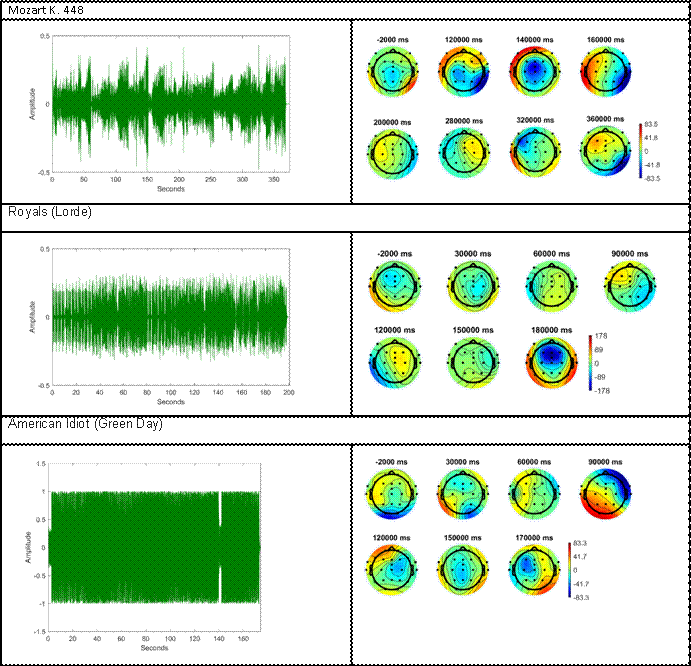
So in the interest of popular science, we convinced Marjan, who loves music as much as we do, to conduct a little experiment with Rhiannon and I. One day earlier this month, Marjan had us both hooked up to an EEG monitoring unit and recorded our brain activity while listening to music.
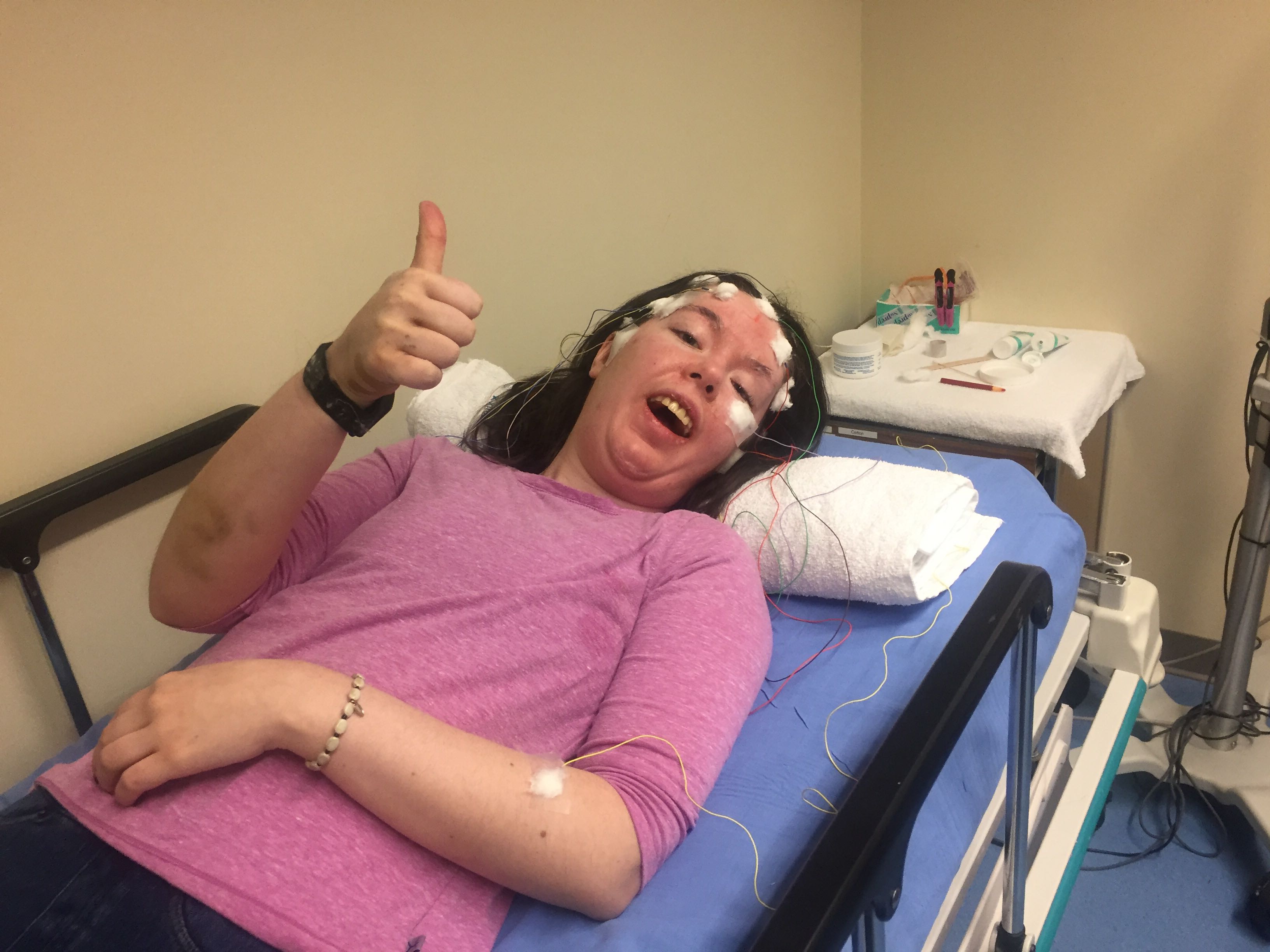
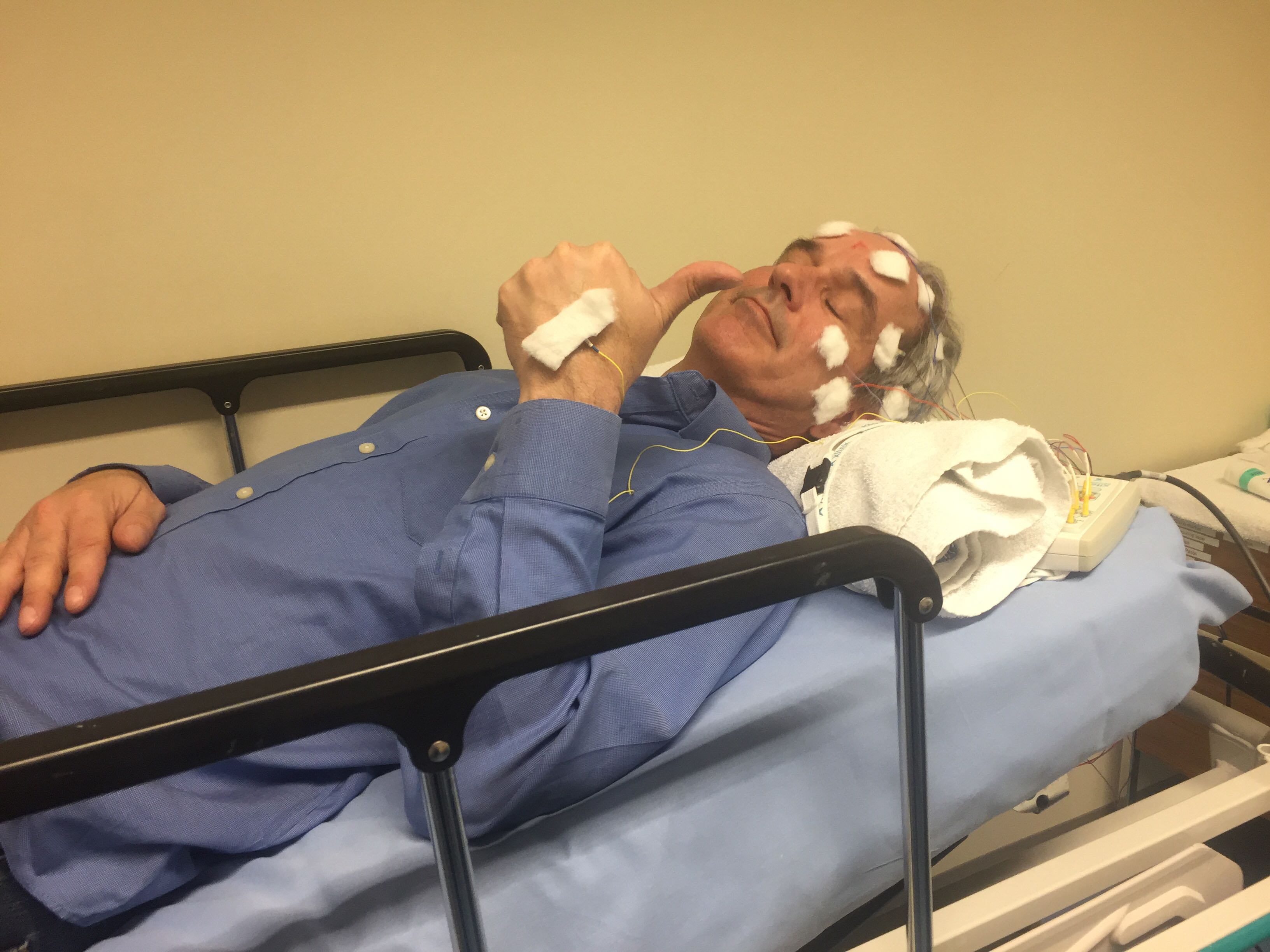
Like the participants in the formal study, Rhiannon and I listened to the Mozart sonata.

Then we listened to the kind of musi c we play on our lake drives. Inspired by the best-selling books “This is Your Brain on Music” and “The World in Six Songs” by Montreal neurologist Dr. Daniel J Levitin,  Rhiannon and I each came up with a list of our six favourite songs…ever.

If you love music as much as we do, that’s really hard to do. My list of honourable mentions of songs that did not make the top six goes on and on.

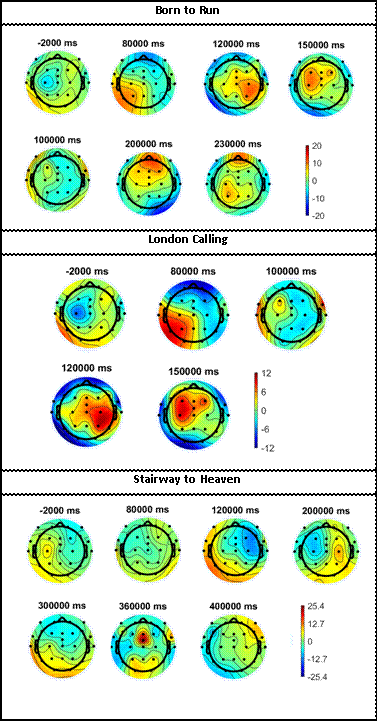
Which is where the Rhiannon Project begins.  In the months ahead, as Marjan completes the EEG analysis, (and explains it to me in a way I can understand), I will document what our brains were like on music, while explaining the role music therapy is playing in this golden age of research into the brain in a variety of clinical settings.  For people with Alzheimer’s and Dementia, music therapy is helping unlock ancient memories once thought to be gone forever. For people with Parkinson’s, it is helping with motor-neuron skills.

As part of the Rhiannon Project we invite everyone in the epilepsy community, including loved ones and friends, to be a part of the conversation about the role music therapy can and does play in our lives.

As a person with epilepsy, do you feel a connection to music like Rhiannon and I do?  Does the idea of music having healing properties make sense in your own life?

Then we have a simple challenge for you. Let us know what your world in six songs is – your’re favourite six songs…ever.

Let us know here on our website, on our Facebook page, on Twitter with the hashtag #EORhiannonProject, or you can email me directly at [email protected] or @seanomalley32

Let’s make this a communal conversation about our love of music and our hopes that clinical research like this will lead to a better understanding of epilepsy and the brain.

As an added bonus, we will randomly select one participant in the Rhiannon Project to come into our music lab so we can show them what their brain looks like on music.

My World in Six Songs: Let It Be (The Beatles), Gimme Shelter (Rolling Stones), Stairway to Heaven (Led Zeppelin), Born To Run (Bruce Springsteen), London Calling (The Clash), Nightswimming (R.E.M).
 

Rhiannon’s World in Six Songs: Royals (Lorde), American Idiot (Green Day), New Orleans is Sinking (The Tragically Hip), Never Ever Getting Back Together (Taylor Swift), Self-Esteem (The Offpsring), Mr. Bright Side (The Killers)
Want to learn more about the epilepsy music therapy study and find out if you are eligible to enroll?

Are you an adult individual with drug-resistant epilepsy? Are you interested in contributing to a clinical research study about the potential benefits of music therapy in reducing seizure frequency? If so, you may be eligible to participate in our clinical research study – The Rhyme and Rhythm of Music in Epilepsy – at the Toronto Western Hospital, sponsored by Epilepsy Ontario and in partnership with the Krembil Research Institute. You may qualify if you have tried a number of anti-seizure medications without complete seizure control, and you can not benefit from other common treatment options, including surgery, ketogenic diet, vagus nerve stimulation (VNS), and deep brain stimulation (DBS). For more information on the study and the eligibility criteria please visit this site

Putting Epilepsy Programs in Provincial Budget

February 22, 2018

Epilepsy Ontario has sent the provincial government recommendations on how to improve the lives of people with epilepsy, by funding community education and support programs at Community Epilepsy Agencies, as part of this year’s budget consultation.

Click here to send a short message of support to the Health and Finance Ministers.

While Epilepsy Ontario and Community Epilepsy Agencies connect with MPPs at the annual Queen’s Park Action Day, this is the first year a formal budget proposal has been submitted as part of the province’s pre-budget consultations. The submission recommends government funding for Epilepsy Agencies to continue and expand the work they do providing epilepsy education and first aid training and providing on-going client programs like support groups and counselling.

If successful, the funding could have a real impact on the lives of people living with epilepsy, ensuring all Community Epilepsy Agencies can provide the important information everyone needs when first diagnosed, like when a seizure is and isn’t a medical emergency or how to manage triggers. Those people who need more or specialized support, with work, school, or other challenges, will also get the help they need.

The provincial government already funds similar programs for other neurological conditions, like the Alzheimer’s First Link program, but so far hasn’t funded Community Epilepsy Agencies to do similar work. Programs like First Link, and information collected from Epilepsy Southwestern Ontario’s Clinic To Community epilepsy education program, have shown how important education programs could be in the lives of people living with epilepsy. Now is the right time to make the pitch to the provincial government.

Funding Community Epilepsy Agencies will be the focus at this year’s Queen’s Park Action Day in March. You can also show your support by sending a short message to the Health and Finance Ministers.  https://form.jotform.com/80445727484262

SECOND NOTIFICATION: Discontinuation of Frisium® (clobazam) Tablets in Canada

January 31, 2018

January 26, 2018

SECOND NOTIFICATION: Discontinuation of Frisium® (clobazam) Tablets in Canada

Dear Healthcare Professional and Epilepsy Patient Advocacy Organization,

As communicated first in July 2017, after careful consideration, Lundbeck has made the decision to discontinue the manufacturing of Frisium® (clobazam) Tablets in Canada. This decision was not triggered by a safety issue, but rather is based on the numerous generic clobazam alternatives available in Canada.

Due to an increased demand of Frisium in the second half of 2017, we now expect our current inventory to be depleted in the third quarter of 2018.

As mentioned before, Lundbeck first communicated this change well in advance to give healthcare professionals, patients and families as much notice as possible so that Frisium patients have ample time to successfully shift to an acceptable alternative clobazam therapy. Health Canada also was notified last summer. As well, we have listed our proposed discontinuation date on the drug shortages website in Canada.
As a company with a strong record of supporting the epilepsy community, Lundbeck is aware of the ongoing struggles many physicians and their patients experience in managing seizures. We are deeply committed to the epilepsy community, which is why we are taking several steps to ease this transition, including:

• Providing access to Lundbeck’s Medical Information team at 866 880 4636 to address questions or concerns. We will closely monitor responses from patients, their families and healthcare professionals and address concerns appropriately.

• Distributed two discontinuation letters to a comprehensive list of physicians, pharmacists and patient advocacy organizations throughout Canada in July 2017 and January 2018, providing more than a year’s lead time to enable a carefully thought-through treatment transition plan.
○ A final letter is scheduled for the summer of 2018.
○ Patient advocacy organizations will be encouraged to share all notifications for use in on and offline communications materials, as appropriate.

• Implementing allocation plans to ensure appropriate steady supply of the remaining Frisium tablets to the market based on historical demand.
• Conducting outreach to pharmaceutical wholesalers.

Again, please contact Lundbeck Medical Information at 866 880 4636 if you have any questions.
Sincerely,

Doug Williamson, MD
Chief Medical Officer, VP US Drug Development
Lundbeck