Author Archives: eCreative Studios

Epilepsy-focused biology unit for Grade 12 students

September 13, 2012

The main goals of an innovative Grade 12 science unit focused on seizure disorders are reducing the stigma surrounding epilepsy, teaching seizure first aid and encouraging interest in youth to pursue careers in epilepsy research and health sciences.
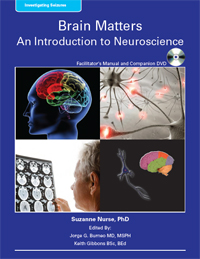
The program, called Brain Matters: An Introduction to Neuroscience, was developed by the London, Ont.-based Epilepsy Support Centre to complement the high school biology curriculum and give students the opportunity to learn about a common neurological disorder while they also learn about the brain and how it works. The program was developed with funding received from the Ontario Trillium Foundation and collaboration from high schools, epilepsy centres and researchers.

While all of the program’s objectives are important, epilepsy expert Suzanne Nurse, who helped develop Brain Matters, says the need to erase the stigma surrounding epilepsy is top of mind because the lack of accurate information about epilepsy contributes to the fear and stigma associated with the disorder.

Engaging students in seizure first aid is important because while many people know how to respond to other medical emergencies, there needs to be greater knowledge about how to respond appropriately to a person having a seizure, Nurse notes.

With a need for more epilepsy researchers and health-care professionals specializing in seizure disorders, Nurse says the goal of attracting young people interested in health sciences to focus their careers is crucial. And there are many career opportunities in this area, she says.

“Epilepsy researchers, neuropsychologists, EEG technologists and registered dietitians (are examples of) health-care professionals (working in the epilepsy field),” she says.

Brain Matters features information including a facilitator’s manual, companion DVD, case studies, knowledge application materials, classroom demonstrations, videos of youth talking about their seizures and epilepsy, seizure first aid and interviews with health-care professionals and researchers discussing career options in neuroscience.

“It’s a unique program because teachers can use it in the classroom to help their students understand biology concepts, such as homeostasis and action potentials, but in a way that engages students and makes them interested in learning,” says Nurse.

The program is not mandated by the province to be included in the Grade 12 biology curriculum but has been endorsed by a number of Ontario school boards. Teachers who wish to adopt it should contact the science consultant at their school board or visit the link below.

More information on Brain Matters can be found by clicking here

If you have feedback on this story, please contact the newsroom at 800-294-0051, ext. 23, or e-mail deron(at)axiomnews.ca, or leave a comment below.

Writer: Deron Hamel
Ontario Photo Card

September 6, 2012

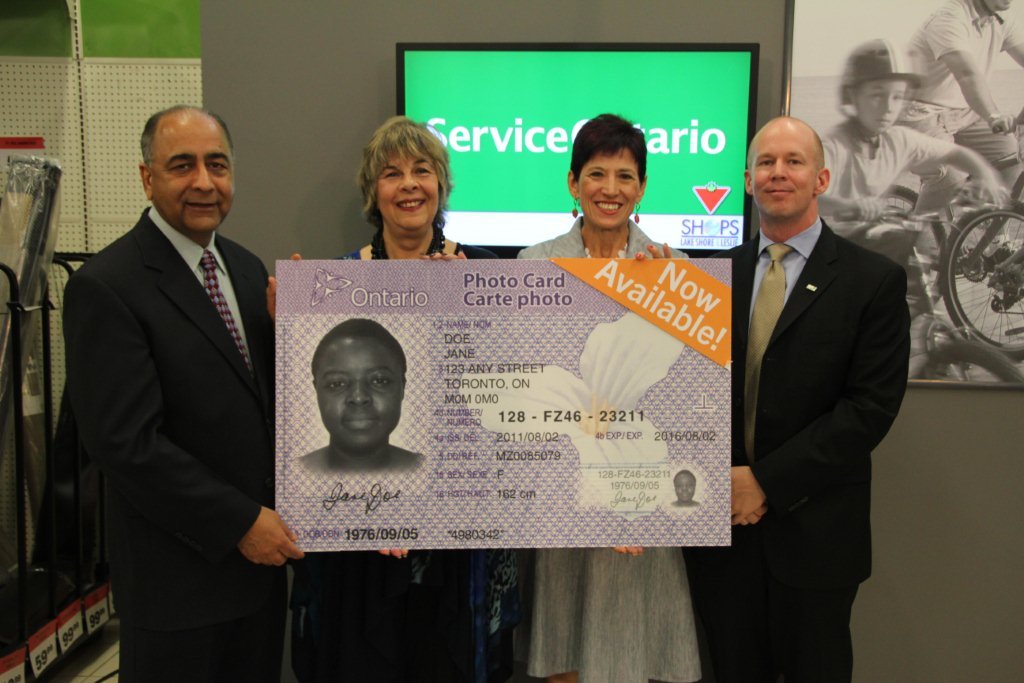
Ontario introduced a new photo card that will provide government-issued identification to Ontarians who do not drive. The Ontario photo card makes it easier for non-drivers to perform everyday transactions such as opening a bank account, cashing a cheque or returning merchandise to a store. The voluntary card was launched on July 25, 2012 and is available to individuals 16 years of age and over who do not hold a driver’s licence.

The photo card is being rolled out to Service Ontario Centres locations across the province.

Click here to find a Service Ontario centre that offers the Ontario Photo Card.

Epilepsy Ontario was pleased to participate in two of the launches. See photos below:

Elisa McFarlane, president of Epilepsy Ontario (second from the right), joins Minister Harinder Takhar and representatives from CARP and the Canadian Hearing Society at the Service Ontario located in the Canadian Tire store on Lakeshore Road in Toronto.
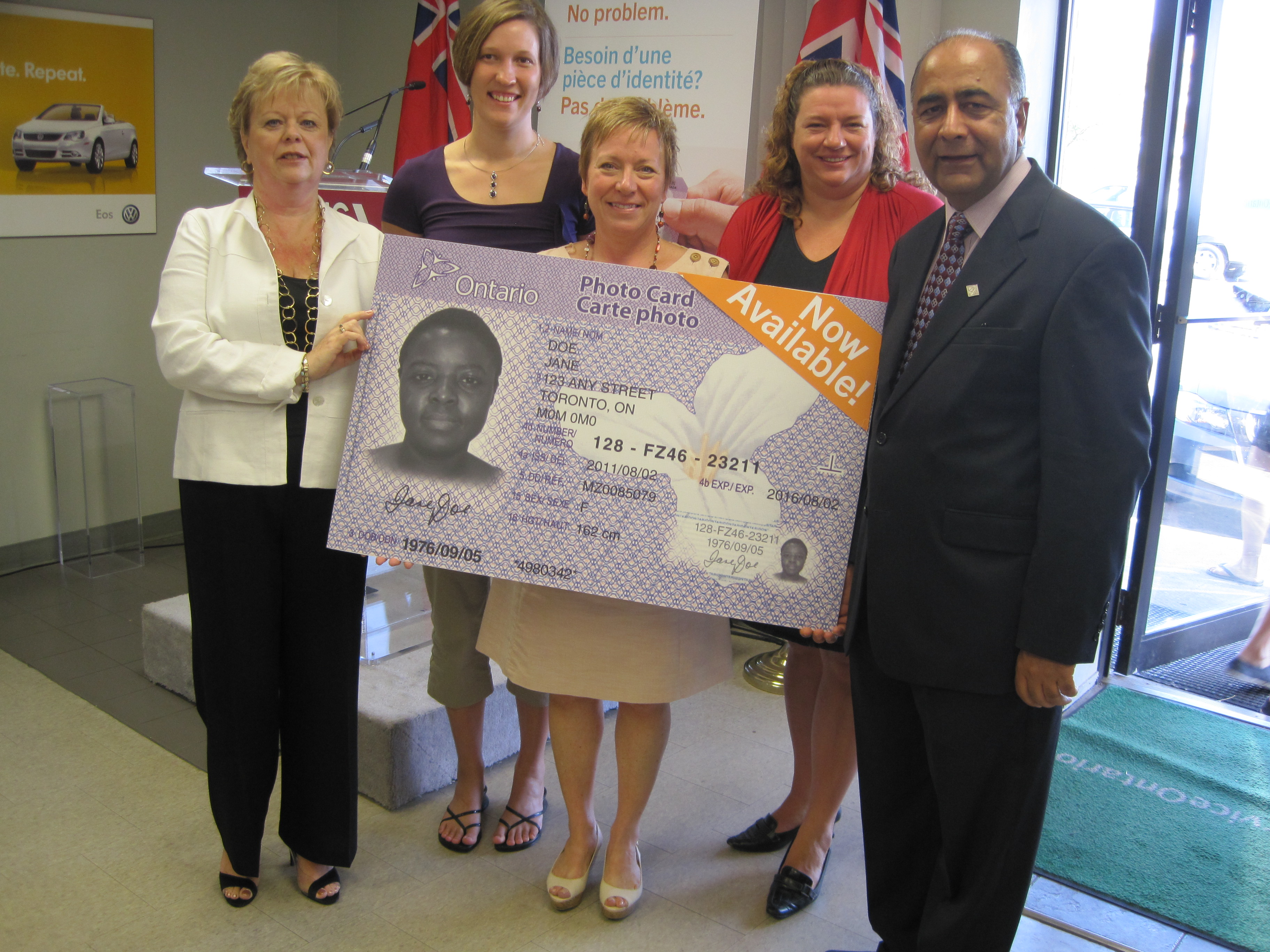
The Ontario Photo ID Card was launched at the Service Ontario location in Kitchener in August 2012. Pictured from left to right are:
Cindy Del Bel Belluz – Service Ontario Service Provider
Valerie Huszarik – Epilepsy Ontario, Waterloo-Wellington
Rozalyn Werner-Arcé, Executive Director, Epilepsy Ontario
Jennifer Urosevic, Manager, CNIB Waterloo
Minister Harinder Takhar, Government Services

What people with seizure disorders should know about medication funding

September 6, 2012

When a 20-year-old man living with complex seizure disorder was recently denied funding for new medication from the Ministry of Health and Long-Term Care’s Exceptional Access Program (EAP), after having a severe reaction to EAP-approved medication, he and his family lodged a complaint with Ontario’s ombudsman’s office.

Once investigated by the ombudsman, it was discovered the man’s neurologist should have been notified that alternative medication would have been funded if a “severe adverse reaction” form had been completed.

The situation was eventually rectified but this is an example of a lack of understanding that exists when it comes to accessing medication funding for people living with seizure disorders, says epilepsy expert Suzanne Nurse.

For people wanting to learn more about how to receive funding for seizure-control medication, Nurse says the Ministry of Health and Long-Term Care’s website is a good starting point because it offers information about drug programs they can access, as well as medication funding application forms that can be downloaded.

Nurse adds that people can also call the Ministry of Health and Long-Term Care for information, as well as their local epilepsy support agency.

“Epilepsy agencies and Epilepsy Ontario are available to help people navigate the system,” says Epilepsy Ontario executive director Rozalyn Werner-Arcé.

Nurse notes that requests for medication funding are sometimes denied but when this happens people should not be discouraged — this happens frequently and persistence is key to having a medication funding application approved.

“It’s not uncommon for us to hear that somebody has applied for funding under programs and have been denied, so generally what we tell people is that if their application has been denied it’s a good idea for them to talk with their local agency and get some input about reapplying and what might be necessary for them to do to get approved,” says Nurse.

“Don’t give up if you’re denied.”

People looking for information about medication funding for seizure control can visit the following links for more information:

Ontario Public Drug Program: http://www.health.gov.on.ca/en/public/programs/drugs/programs/odb/odb.aspx

Trillium Drug Program: http://www.health.gov.on.ca/en/public/programs/drugs/programs/odb/opdp_trillium.aspx

Exceptional Access Program:  http://health.gov.on.ca/en/public/programs/drugs/programs/odb/opdp_eap.aspx

If you have feedback on this story, please contact the newsroom at 800-294-0051, ext. 23, or e-mail deron(at)axiomnews.ca, or leave a comment below.

Writer: Deron Hamel
Run supersedes expectations, organizer sees new possibilities

August 31, 2012

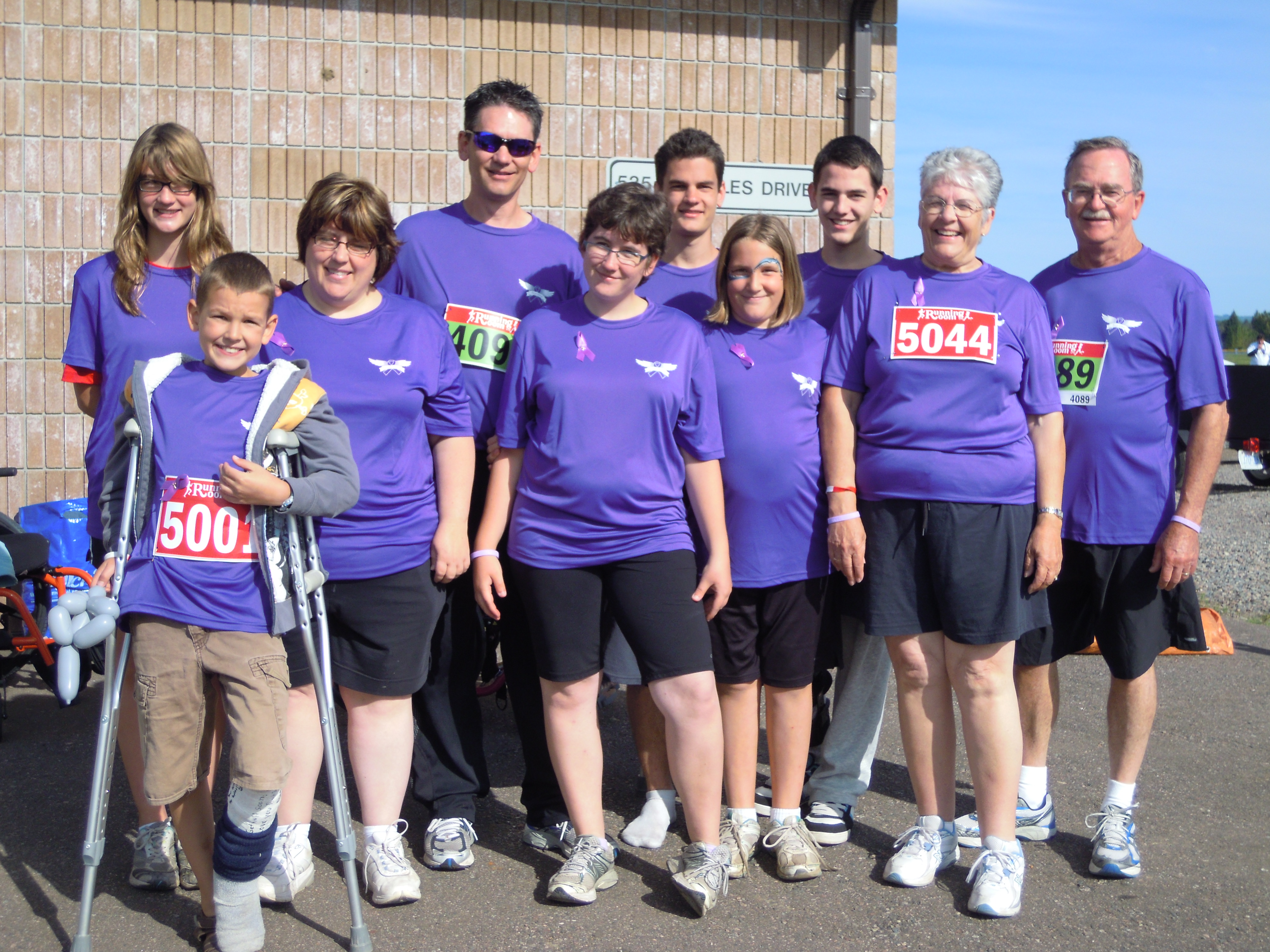
With more than 300 participants in the 2012 Run for Epilepsy in Thunder Bay, organizer Trevor Lewis says he hopes the success of the Aug. 19 event will be a catalyst for opening a support agency in Thunder Bay to assist northwestern Ontarians living with epilepsy.

“I am hoping that (the run’s success) will serve as a major launch in that direction,” he says.

More than 300 people participated in the Run for Epilepsy on Aug. 19 in Thunder Bay.

“To see that big of a response from the community coming out to join us was really encouraging because, to me, it indicates there is also going to be support for an agency to open up here.”

To date, more than $17,000, before expenses, was raised during the run, and money is still coming in, says Trevor. This is more than double the funds he and his daughter, Katie, and the rest of a team running under the Epilepsy Ontario banner raised last year at two runs, he adds.

“It was far more than I was hoping it to be,” says Trevor.

“We had thought that it would be a great goal to have 150 to 200 participants for it, and the final tabulations showed that we had 304, so that was amazing. This is well beyond anything that we had ever envisioned.”

The idea for the run was sparked by Katie in 2010. After watching her dad train for and compete in a run to raise money for a local children’s music festival that year, she asked Trevor if the pair could train together for a run to raise money for Epilepsy Ontario, and the rest is history.

Despite the six-degree temperature that morning, the runners, walkers and rollers participating were revved up and ready to go. In fact, the start of the run was delayed 15 minutes because last-minute signups kept coming in, says Trevor, who was joined in the run by his parents, his wife and their six children.

The event also had the support of 29 crewmen aboard the HMCS Ville de Quebec, which was docked in Thunder Bay.

“To have the support of our navy was awesome,” says Trevor, who credits the event’s success to a media blitz that saw him do six live interviews on two local radio stations.

Title sponsor Northern Credit Union and the Running Room went “the extra mile” in helping make the event a success, Trevor adds.

If you have feedback on this story, please contact the newsroom at 800-294-0051, ext. 23, or e-mail deron(at)axiomnews.ca, or leave a comment below.

Writer: Deron Hamel

<