
Author Archives: eCreative Studios

Heather Girardin one step closer to dream with help of scholarship

June 26, 2014

A $1,000 OBCL Epilepsy Scholarship is moving Heather Girardin one step closer to her dream of becoming a registered practical nurse (RPN).

Heather, who lives in London, Ont., is using the scholarship to help finance her first year at Fanshawe College, where she will be taking the general arts and science certificate program. After completing that program, Heather plans to pursue Fanshawe’s practical nursing course in September 2015. Once she completes that course Heather will be qualified as an RPN.

Heather Girardin is seen here with her family and OBCL president Lawton Osler after receiving her scholarship.

Heather, who is living with epilepsy, says the scholarship is important to single-income providers like herself so they can reach their career goals. The scholarships, the mother of two adds, help minimize student debt.

On top of this, Heather, 24, is dedicated and driven, and once she sets her sights on a goal she doesn’t relent.

“I am a hard-working, dedicated individual who reaches for the highest stars,” Heather says. “I don’t give up (or) let things hold me back. I push myself to do my best and overcome the challenges that would stand in my way.”

Amanda Reil has known Heather for about 10 years. She has seen Heather overcome the obstacles that come with living with a seizure disorder. Her determination is outstanding, Amanda says.

“She is the type of person who will not take ‘no’ as an answer,” Amanda writes in a letter to Epilepsy Ontario, recommending Heather for a scholarship. “She fights for what she believes is true and right, and doesn’t let anything keep her down. . . .

“The OBCL scholarship would go a long way toward helping Heather achieve what she wants, and I could not think of anyone more worthy of accepting it.”

The OBCL Epilepsy Scholarship Awards were presented June 13 to six students in the province this year.

OBCL has been supporting students with epilepsy through the scholarship awards since 2006. Every year, up to 10 Ontario students win a $1,000 scholarship for post-secondary education. As part of their application package, students must submit a personal essay under that year’s theme.

Writer: Deron Hamel

If you have feedback on this story, or have a story of your own that you would like to share, please contact the newsroom at 800-294-0051, ext. 23, or e-mail deron(at)axiomnews.ca. You can also leave a comment below.
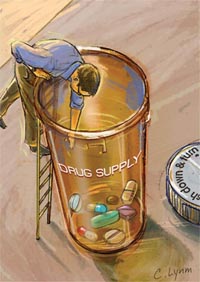
President of Canadian Medication Association speaks about the drug shortages in Canada

June 26, 2014


Canadian Medical Association President, Dr. Louis Hugo Francescutti, highlights the serious implications and effects on people’s lives when epilepsy medications are not available. You can see the video below or click here to redirect you to CTVnews official site.

In addition, there will be a public consultation with Health Canada where you can participate to discuss your views on this issue. To participate, you must complete the online survey that takes about 10-20 minutes to complete. This gives everyone an oppurtunity who are concerned about drug shortage to make sure their voice is heard.


Canadian Epilepsy Alliance Calls for Changes to Address Drug Shortages (19 June 2014)


June 19 2014. The Canadian Epilepsy Alliance/l’Alliance canadienne de l’épilepsie (CEA/ACE) is calling for changes to Canada’s system for addressing shortages of prescription drugs. The call comes as Health Canada conducts a public consultation into the state of Canada’s drug shortage notification system, a system the CEA says is not doing enough to prevent and address drug shortages. “We need real action on drug shortages in Canada,” says Suzanne Nurse, Chair of the CEA Drug Shortages Committee. “Too often people living with epilepsy only find out about a drug shortage at the pharmacy when they try to refill their medication. That is unacceptable and puts the health and safety of
people living with epilepsy at risk.” People with epilepsy can face serious consequences including injuries, accidents and even death if there is
a sudden disruption in the supply of their anti-seizure medication. The impact on someone’s life can be tremendous when they leave their pharmacy empty-handed, there is huge stress, worry about potential loss of a driver’s licence or loss of a job due to breakthrough seizures, and parents worry about their child’s safety.

Diana, a mother in London Ontario, was glad to learn about Health Canada’s public consultation. “I did the survey right away” says Diana who has had a personal experience with drug shortages. “It was scary said Diana, referring to a shortage of an epilepsy medication called clobazam this spring. “I called one drug store after another worrying that I would not be able to get my daughter enough medication to last through the shortage. No one should have that extra stress in their lives.” 

Health Canada’s Consultation on the Notification of Drug Shortages centers on the effectiveness of a single website, drugshortages.ca, where pharmaceutical companies can post information about drugs in short supply. Posting is voluntary and information about the frequent shortages in recent years has often come late or not at all, meaning patients, physicians and pharmacists are often left scrambling.

The Canadian Epilepsy Alliance believes that Health Canada must move to a mandatory notification system, as the United States has done, with pharmaceutical companies providing information about shortages as soon as it available. That notification is only one part of what needs to happen to address shortages, says the CEA’s Suzanne Nurse.

“Early notification gives people more time to respond to shortages,” says Nurse, “but notification on its own does not prevent shortages and it doesn’t address what happens when there is a shortage. We need Health Canada to be more involved, working with manufacturers, pharmacists, physicians and patients, to prevent shortages before they happen and to take real action when they do.” Health Canada’s public consultation on drug shortages runs until July 5th. The 9 question online survey takes about 10-20 minutes to complete and gives anyone concerned about drug shortages an opportunity to make sure their voice is heard.

Public Consultation: http://www.hc-sc.gc.ca/dhp-mps/consultation/drug-medic/consult_shortages-penurieseng

For more information contact:

Suzanne Nurse, PhD
Chair, Canadian Epilepsy Alliance Drug Shortages Committee
Phone: (519) 317-9174
Email: [email protected]

About the Canadian Epilepsy Alliance

The Canadian Epilepsy Alliance (CEA) is a Canada-wide network of grassroots organizations dedicated to the promotion of independence and quality of life for people with epilepsy and their families, through support services, information, advocacy, and public awareness. For more information, please call 1-866-EPILEPSY (1-866-374-5377).

People with epilepsy can provide valuable input during drug-shortage consultation

June 19, 2014

People concerned about medication shortages are encouraged to participate in a public consultation that’s open until July 5 to provide Health Canada with feedback about this issue and to assess current approaches.DrugShortage

During the past five years there have been frequent drug shortages in Canada, including multiple shortages of epilepsy medications. Epilepsy Ontario wants to see mandatory drug-shortage notices posted by pharmaceutical companies to promote safety and provide extra lead time to come up with solutions. The organization is concerned that the situation will worsen in coming years.

The epilepsy community has faced shortages of clobazam, a common medication prescribed to people with seizure disorders, which were reported in January 2013 and again this past January as well as shortages of valproic acid, Dilantin, Zarontin and other epilepsy medications.

Epilepsy Ontario epilepsy information specialist Suzanne Nurse says Health Canada’s approach to this issue is a step in the right direction.

“I think it’s positive that the government is looking for feedback on how the current system is working. If it’s not working, Health Canada wants to hear about it so they can chart a path to address those problems ,” she says.

The consultation is open to anyone, but Nurse says people requiring consistent access to medication because of chronic conditions, such as epilepsy, would bring an especially important voice.

Presently, pharmaceutical companies are requested to post notices of impending or current drug shortages on the Canadian Drug Shortage Database website. Nurse says Epilepsy Ontario would like to see it made mandatory through legislation that pharmaceutical companies post information about medication shortages. In the event of the discontinuation of medications, Nurse says there needs to be significant notice given because it can take people a long time to adjust to new medications.

“For any situation where there is going to be a disruption of supply, pharmaceutical companies should provide notice as soon as they know,” Nurse says. “The problem we have at the moment is that notification on the site doesn’t seem to be happening as soon as pharmaceutical companies would be expected to be aware of the issue, and it’s often happening by the time people find out from their pharmacist that the drug is not available.”

However, mandatory notifications are not enough, she adds, noting there needs to be a full-scale strategy focused on both prevention and management of drug shortages.

Click here to participate in the Health Canada consultation.

For more information click here: https://epilepsyontario.org/anti-convulsant-drug-shortages/

Writer: Deron Hamel

If you have feedback on this story, or have a story of your own that you would like to share, please contact the newsroom at 800-294-0051, ext. 23, or e-mail deron(at)axiomnews.ca. You can also leave a comment below.

Have Your Say on Drug Shortages (May 22 – July 5)

June 13, 2014

“Your medication isn’t available”. This shocking news from your pharmacist comes out of the blue with little time to seek solutions. Unfortunately, it’s often the first notice that people receive that there is a drug shortage and many people with epilepsy cannot simply change their medication safely on short notice.

Over the past five years there have been frequent drug shortages in Canada, including multiple shortages of epilepsy medications. The situation is not getting better. If nothing is done to identify and address the causes of drug shortages we expect the situation to get worse in the coming years.

Health Canada is holding a public consultation on the current approach to drug shortages from May 22 to July 5, 2014.

The public consultation will go a long way to making sure decision makers hear from the people most affected by drug shortages. The Canadian Epilepsy Alliance, of which Epilepsy Ontario is a member, encourages everyone concerned about drug shortages to participate.

For an introduction to drug shortages and an overview of the survey questions in the public consultation click here.

Click on a link below to participate in the public consultation:

English: www.hc-sc.gc.ca/dhp-mps/consultation/drug-medic/consult_shortages-penuries-eng.php

French: www.hc-sc.gc.ca/dhp-mps/consultation/drug-medic/consult_shortages-penuries-fra.php

Contact [email protected] for more information on anti-seizure drug shortages and the strategy proposed by the Canadian Epilepsy Alliance to address this serious issue, or click here for a more detailed analysis.