Author Archives: eCreative Studios

Agencies hoping On the Edge will enlighten a new demographic

June 12, 2014

Donna Pammer and Dianne McKenzie say the best thing that could stem from their epilepsy support agencies hosting screenings of On the Edge would be for people who are not connected to the epilepsy community to attend — and walk away with a better understanding of the condition.OntheEdge215

On the Edge is a documentary about epilepsy written and directed by Louis Stanislaw, a U.S. filmmaker who has coped with seizures his whole life. Through a series of interviews Stanislaw conducts throughout the film, we hear about the painful truths, misunderstandings and difficulties of living with epilepsy at every turn; from family life to school, to leaving home, and starting a career and forming lasting bonds.

The documentary also explores how there is a stigma about epilepsy and about people who are living with the condition. This stigma can cost people their jobs and friendships, which can lead to other conditions, most notably depression and anxiety.

Epilepsy Support Centre in London is hosting a screening on June 23 at 6:45 p.m. at the London Public Library’s main branch. Pammer, the agency’s executive director, says she looks forward to the event for several reasons.

“This is a great opportunity to share the experience of people with epilepsy with the broader community,” she tells Voices of Epilepsy. “Having this screening at the public library allows us to engage with the broader community, and we really think that is an advantage.”

Pammer says she hopes the screening will also attract people living with a seizure disorder that the agency has not connected with before. In other words, Pammer adds, there could be new opportunities to help people affected by seizure disorders by sharing with them everything her agency offers.

“We also hope to attract people with epilepsy or other neurological disorders that might be willing to volunteer or support our work,” she adds.

On the Edge will be screened at the Whitby Abilities Centre on June 25 at 6:45 p.m. Like Pammer, McKenzie, the executive director of Epilepsy Durham Region, says she hopes the film will attract a new demographic.

She says she hopes the film will also serve as an educational opportunity to those people.

“I am looking forward to (the documentary) enlightening people, not only people who have epilepsy, but our general population as well — it’s equally as important to educate the general public to understand what seizures are and what they can look like and how they can respond,” she says.

Both screenings will be followed by panel discussions. Registration for both screenings are free, but those who wish to attend are asked to register by clicking here.

On the Edge premiered in Canada last October to much fanfare from the epilepsy community. UCB Canada has provided funding for additional screenings in Ottawa (May 21), Whitby and London.

Writer: Deron Hamel

If you have feedback on this story, or have a story of your own that you would like to share, please contact the newsroom at 800-294-0051, ext. 23, or e-mail deron(at)axiomnews.ca. You can also leave a comment below.

[Event] ON THE EDGE: Living with Epilepsy

June 11, 2014

OntheEdgeEpilepsy Ontario  is excited to announce On the Edge: Living with Epilepsy Road Tour. Additional screenings will take place in Ottawa, Durham Region (Whitby) and London. Each film screening will include a facilitated conversation including a clinician, a person who has epilepsy and community epilepsy representative. 

On the Edge: Living with Epilepsy is a documentary told through the eyes of the filmmaker, Louis Stanislaw, people who have epilepsy and family members. It tells the painful truths, misunderstandings, and difficulties of living with epilepsy at every turn; from family life to school, to leaving home, and starting a career and forming lasting bonds. On the Edge also examines the medical and social progress we are making. For more information about the film and the director, click here.


“On the Edge: Living with Epilepsy is one of the most important
public awareness events hosted by Epilepsy Ontario and its partners:, Epilepsy Ottawa Epilepsie, Epilepsy Durham Region, and Epilepsy Support Centre.”

You are invited to experience this unique film event! By attending the On the Edge: Living with Epilepsy screening, you are showing your support for Epilepsy Ontario and its programs and services including public awareness, client services and advocacy. Keep checking this page for updates!

Event Details – Please note change of dates for London and Durham Region (Whitby)

Dates and Locations:
May 21, 2014 – Ottawa                      National Arts Centre

June 23, 2014 – London                     London Public Library, 251 Dundas St. 

June 25, 2014 – Whitby                      Abilities Centre

Doors Open:

6:00 pm

Opening Remarks:
6:30 pm

Screening of Film:
6:45 pm

Panel discussion:
7:40 pm

Reception:
8.20 pm


Complimentary tickets are limited and are available on a first-come, first-serve basis. To reserve your tickets:
reserve-tickets


Thank you to our Supporters

June 11, 2014


Langstaff Secondary School - Purple DayEpilepsy Ontario gives a big shout out to the staff and students of Langstaff Secondary School who organized a Purple Day event during March – Epilepsy Awareness Month – for Epilepsy Ontario.  Their fantastic efforts played a key role in raising important awareness about epilepsy at the school as well as raising $793.94 for Epilepsy Ontario.

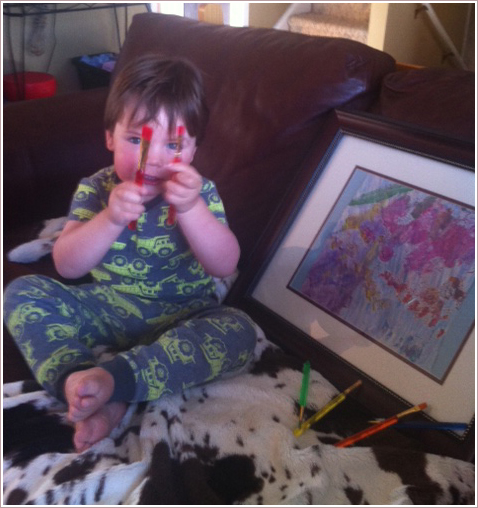
Budding artist, Dawson Flemming, at the ready with paint brush in hand.

Special thanks to Dawson Flemming whose artistic efforts raised $75.00 through an auction of his hand-drawn picture! 

These funds will go a long way in helping us to fulfill our mission of providing information and education about epilepsy.

Thank you!

Trainer explains value seizure response dogs deliver

June 5, 2014

Gloria Peckham recalls how a British Columbia man, who received a seizure response dog she trained, is now living independently because of the canine.Dog200

The man has a severe seizure disorder, and health authorities suggested he move into a group home because he experiences so many seizures. However, because the man now has a seizure response dog trained to press a Lifeline button as soon as he has a seizure, he is living on his own.

“Without that dog, he would not be able to live independently,” Peckham says.

This is just one of many successes seen by Peckham, the head trainer at Canada Dog Guides. These special animals are giving many people affected by seizure disorders a new lease on life, she says.

It’s a thorough training process the animals must go through on the road to becoming seizure response dogs, Peckham explains.

A trainer will have approximately eight dogs to start training. Trainers look for dogs that are attentive to the handlers; dogs with a pleasant disposition but also confident enough that they won’t be scared by loud noises, she says.

Here’s how the training process works:

First, the dogs are taught to bark for help with a word command; the command will eventually become a shaking body, replicating a seizure. Dogs are then taught to activate alert systems, in other words, hit a button, and finally the dogs are taught to seek help in a home environment.

“Once we have the dog about halfway through the training and we see what type of dog we have, we’ll then go to our waiting list and take the first people off the top of the list to see what their needs are, their lifestyle, and we start matching the dog to the person.”

Once a match is found, the dog will be trained to respond to the specific type of seizure the person is experiencing. For example, some people have a distinct noise they will make prior to a seizure, while other people will shake. The dogs are trained to respond to specific cues that their owner is having a seizure.

To qualify for a seizure response dog, people need to experience several seizures a month for the dogs to be effective. They also need to practise having seizures to keep the dogs’ senses fine tuned.

Dog Guides Canada specializes in training several breeds: Labrador retrievers, golden retrievers, standard poodles and miniature poodles. Dogs typically take four to six months to train. Candidates for seizure response dogs attend a three-week class at the Dog Guides Canada training facility in Oakville.

Click here for more information on Dog Guides Canada.

Writer: Deron Hamel

If you have feedback on this story, or have a story of your own that you would like to share, please contact the newsroom at 800-294-0051, ext. 23, or e-mail deron(at)axiomnews.ca. You can also leave a comment below.