
Author Archives: DHamel

Epilepsy York Region receives $35K from Taste of the Hill to support education, family assistance

November 24, 2016

By Deron Hamel

Epilepsy York Region recently received $35,000 from the proceeds of an annual festival in Richmond Hill that will largely be put towards raising epilepsy awareness through education and providing supports to families of children living with the condition.
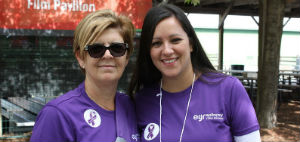
Left to right, Rita and Claudia, representing Epilepsy York Region, are seen here during  Taste of the Hill on Sept. 25.
Left to right, Rita and Claudia, representing Epilepsy York Region, are seen here during Taste of the Hill on Sept. 25.

The agency was selected by Richmond Hill’s events committee earlier this year to be the beneficiary of proceeds raised from Taste of the Hill, a yearly event celebrating the town’s multiculturalism through food, culture and fashion.

Each year the festival selects one charity to support with its proceeds. Charities across York Region apply to have their agency named the beneficiary of the proceeds. Applicants must also help provide sponsors and vendors for the event.

The event was held Sept. 25, and Epilepsy York Region recently received their cheque from Taste of the Hill.

In its submission, the agency focused on how it would use the funding to enhance quality of life for people with epilepsy in York Region – especially children living with the condition.

Epilepsy York Region executive director Claudia Cozza says the committee was particularly taken by the agency’s focus on education, raising awareness of epilepsy in the community and how funding would be beneficial to children living with the condition.

“They didn’t realize a lot of the things people with epilepsy live with, the fact that a lot of anti-epileptic drugs are not covered by OHIP (Ontario Health Insurance Plan), the fact that many children with epilepsy are having seizures at schools and their teachers and their classmates don’t know how to react or how to keep them safe,” Cozza tells Voices of Epilepsy.

Epilepsy York Region will direct the lion’s share of the proceeds at enhancing quality of life through education opportunities, support programs and helping families financially if they need assistance paying for anti-epileptic medication.

Cozza says this type of funding is important for an agency like Epilepsy York Region, noting that the awareness initiatives the agency will provide will help people in York Region better understand epilepsy and the challenges people living with the condition face.

“There is a huge stigma attached to this condition, so it’s important for us to help people understand what epilepsy is all about,” she says.

Cozza says when she learned Epilepsy York Region had been selected as this year’s Taste of the Hill beneficiary, she was “so excited about awareness this would bring, to not only our agency, but to the families (of people living with epilepsy) in York Region.”

Cozza says the Taste of the Hill event itself was an excellent venue for raising epilepsy awareness. Purple is the official colour of epilepsy awareness, and Taste of the Hill staff members wore purple T-shirts and there were signs and posters explaining the event’s proceeds would support Epilepsy York Region.

Epilepsy York Region volunteers and staff were on hand at the event to provide information and discuss epilepsy with attendees and answer questions.

“It was a wonderful event we were definitely proud to be a part of,” Cozza says. “The awareness was phenomenal.”

If you have feedback on this story, or have a story of your own that you would like to share, please contact the newsroom at 1-800-294-0051, ext. 23, or e-mail deron(at)axiomnews.com. You can also leave a comment below.

PBS affiliates across North America to screen ground-breaking documentary about epilepsy

November 17, 2016

By Deron Hamel

Joe Stanislaw says the best results from widespread screening of the documentary On the Edge: Living with Epilepsy would be more awareness, a greater understanding of the potential people with epilepsy have, and more interest in research.

OntheEdge_smallJoe is the father of Louis Stanislaw, a U.S. filmmaker who has coped with epilepsy his whole life. Louis wrote and directed the documentary, which was released in 2013.

On the Edge tells the painful truths, misunderstandings and difficulties of living with epilepsy at every turn; from family life to school, to leaving home and starting a career, to forming lasting bonds with others.

The National Educational Television Association (NETA) has announced it will feed the documentary to the more than 350 PBS stations across the U.S., as well as some affiliated stations in Canada, as part of a national effort in the U.S. to kick off National Epilepsy Awareness Month in November.

“The best possible outcomes would be more awareness from society at large of the enormous amount of people who suffer from epilepsy – that would be No. 1,” Joe tells Voices of Epilepsy. “No. 2 would be a greater understanding of those people who are suffering with epilepsy and the potential those people have as individuals – personally, professionally and socially. No. 3, hopefully (the film will) direct people to more research being done to find solutions.”

The documentary explores the stigma attached to epilepsy. Epilepsy often frightens people who are unfamiliar with the condition, and this has a detrimental trickle-down effect to those living with a seizure disorder.

This stigma can cost people their jobs and friendships, which can lead to other conditions, most notably depression and anxiety, the film explains.

Perhaps most importantly, the film puts faces to the condition, which is meant to inject a better sense of empathy into those listening to the many personal stories unfold.

Each PBS station will decide when and how often it will broadcast On the Edge. PBS has no national programming, so each of its affiliates decides its own scheduling. PBS stations can screen the documentary as many times as they want.

Joe says the documentary has received lots of positive feedback since its release three years ago – and he hopes the momentum continues.

“For people living with epilepsy, there has been a profound sense of ‘thank you’ for creating a better sense of understanding (about epilepsy),” Joe says. “It has changed people’s attitudes. One guy I’ve known for years said, ‘I’m now even more attentive to people on the street who may be in a wheelchair or have visual impairment and want to help them out.’ That’s very powerful.”

The documentary also features interviews with people who have never before gone public about their condition. This, Joe says, is one of the film’s strongpoints.

“People have been told they shouldn’t talk about (their epilepsy), and that’s a mistake,” he says.

Louis is currently working on a book about people’s experiences with epilepsy, which will be published in January.

If you have feedback on this story, or have a story of your own that you would like to share, please contact the newsroom at 1-800-294-0051, ext. 23, or e-mail deron(at)axiomnews.com. You can also leave a comment below.

People with epilepsy being held in custody need to know their rights when it comes to receiving medication

November 10, 2016

By Deron Hamel

The recent case of a man who died following a seizure at the Winnipeg Remand Centre has drawn concern from epilepsy support groups about whether or not there are enough safeguards in place to ensure people needing access to anti-seizure medications are getting them while being held by police or in remand.

medications350Unlike prison inmates, people being held in remand or by police are often only in custody for a short time. But one missed dose of medication can have a serious adverse impact on someone with epilepsy.
“Missing a single dose of a medication for epilepsy puts a person at risk. If it takes a day or two to sort things out, then that’s too long if you have epilepsy,” says Suzanne Nurse, Epilepsy Ontario’s director of information and client services.

In May, Bradley Errol Greene, a 26-year-old man with epilepsy was being held at the Winnipeg Remand Centre when he went into a seizure on a Sunday afternoon. He had been detained since the Friday evening but had not been given his medication. Greene had told his cellmate, Stephen King, to turn him on his side and make sure his head was protected if he had a seizure. According to King, he did this but was shooed away by guards.

“I watched the guards handcuff him, shackle him, throw him on his stomach, they held down his head with two hands and he was shaking forcefully,” King told CBC News.

According to King, Greene was then put into his cell in handcuffs and shackles. Shortly afterwards a second seizure occurred which he did not recover from. Greene’s family is calling for an inquest into his death.

“I hope the family’s calls for an inquest into Mr. Greene’s death is granted, because an inquest could look into the management of his epilepsy and why Mr. Greene did not receive his medication,” Nurse says. “The findings and recommendations from an inquest may help prevent future tragedies.”

Nurse recently spoke with a spokesperson for the Ontario Provincial Police (OPP) to find out what people requiring anti-seizure medication should do if they’re arrested.

“The main message I received from the OPP is that if someone with epilepsy is arrested and detained, they should make certain the police or staff at the booking facility are aware that they require prescription medication on a regular basis for a serious medical condition,” Nurse says.

A person with epilepsy should tell the arresting officer or the booking officer that they require anti-seizure medication, how often they need to take their medication and when they had their last dose, Nurse adds.

If the person arrested has their medication on them, it can be arranged to be administered to them as needed by staff at the lockup facility.

If they don’t have their medication with them, they can let the arresting officer know who the police could contact to retrieve the medication and bring it to the facility where the person is being held.

Nurse notes the medication must be contained in the bottle it was dispensed in with the label from the pharmacy.

Nurse says the Ontario Ombudsman frequently receives complaints from inmates related to medical care and treatment. In 2014, a person filed a complaint because they were denied access to their pain medication for five days and suffered adverse effects. When the ombudsman’s office followed up with the Ministry of Community Safety and Correctional Services, it was determined policies that were in place were not followed.

But what if this happened to a person with epilepsy?

“If you are denied access to your epilepsy medication then contacting an advocate right away, would be a good route to take, because it’s a violation of your human rights, and a lawyer or the ombudsman can help you get the medication,” she says.

If you have feedback on this story, or have a story of your own that you would like to share, please contact the newsroom at 1-800-294-0051, ext. 23, or e-mail deron(at)axiomnews.com. You can also leave a comment below.

Research into improving quality of life is most important to people with epilepsy: survey

November 3, 2016

By Deron Hamel

Research programs aimed at enhancing quality of life for people with epilepsy are the most important avenue of research to those living with seizure disorders, their families and people working at epilepsy support agencies, according to a recent EpLink survey.

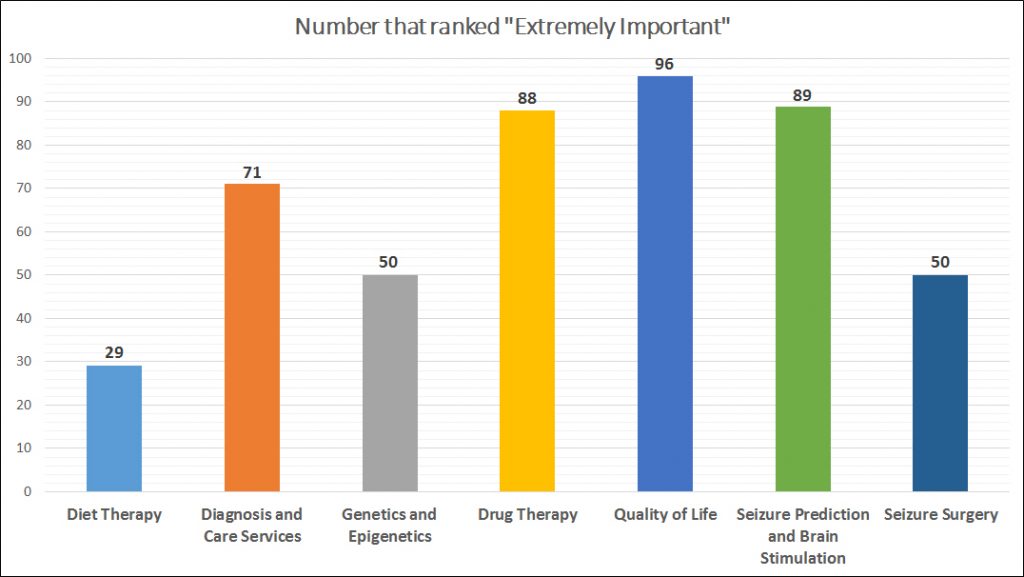
EpLink’s “research priorities” online survey had 139 respondents. The survey, which was conducted May 18 to Sept. 2, showed that 96 respondents said research into improving quality of life for people with epilepsy is “extremely important.” Also high on the list were research programs into seizure prediction and brain stimulation (89 people), and research into drug therapies (88 people).

“Quality of life was the No. 1 theme that people ranked as extremely important – and that’s exactly what we have been hearing in discussions with our nonprofit advisory committee and with people in the community epilepsy agencies,” says Tiffany Scarcelli, EpLink’s knowledge translation lead.

EpLink is the epilepsy research program of the Ontario Brain Institute (OBI). The survey aimed to discover which areas of epilepsy research are most important to those living with the condition to help direct the next phase of EpLink’s research.

The survey, which received responses from 139 people, also asked people what type of research project they would start, if given the opportunity. In terms of treatment, the survey showed people were most interested in marijuana products, alternatives to drugs, curing epilepsy, technologies, surgery, improving current and new drugs, gene therapy and testing, and diet therapy.

extremely-important-final

The survey showed respondents were also interested in research into understanding the causes of seizures, causes of other syndromes, seizure triggers, lifestyle factors, genetics and head injury.

The survey determined people also want to see more epilepsy information, programs, resources for female-related issues, and funding to support people with epilepsy.

EpLink’s mandate is to conduct research to improve treatments and quality of life for people with epilepsy. Scarcelli says EpLink is hoping the survey will help accomplish this goal.

“With this survey, we get a better idea of what people are most interested in, and we’re hoping that our research reflects exactly what is important to people with epilepsy, what’s important to their families, and ensuring whatever research or innovations that come out of the EpLink programs reflect the patient voice and what their needs are,” she says.

Click here to read a full summary of the survey.

If you have feedback on this story, or have a story of your own that you would like to share, please contact the newsroom at 1-800-294-0051, ext. 23, or e-mail deron(at)axiomnews.com. You can also leave a comment below.