Author Archives: eCreative Studios

Neurosurgery gives Cathleen Townsend’s life a ‘360-degree change’

January 29, 2015

One year ago at this time, Cathleen Townsend was having up to 15 seizures per day. Then she had life-changing surgery last April. She’s not had a seizure since.
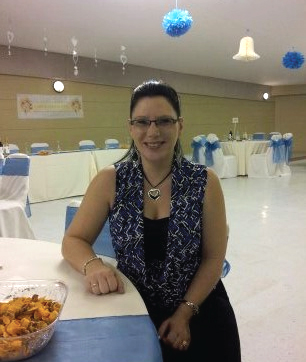
Cathleen Townsend
Cathleen Townsend, February 2014

The Casselman, Ont. resident says her life has had a “360-degree change” in the past nine months. Being seizure-free has allowed her to go back to work for the first time in a decade. She’s now looking at enrolling in college courses. At 41, Townsend is also planning to get her driver’s licence – a feat she could not accomplish when she was having seizures.

What made a difference was Townsend’s persistence. The physician she saw for several years didn’t think surgery was the right option, and Townsend was only given medications to treat her condition. The medications helped reduce the seizures, but didn’t stop them.

Townsend had been living with epilepsy since she was a 16-year-old Grade 11 student living in Miramichi, N.B. For the next 25 years, seizures were a part of Townsend’s life.

Epilepsy greatly affected her personal life.

“Because of this condition, when I had my youngest son, who is now 14, as of February, doctors told me I was lucky to have him,” Townsend explains. “There were complications during pregnancy and after birth. I had to give up the dream of us having any more children.”

The turning point came when Townsend suffered a seizure at her young son’s birthday party. After a quarter century of living with epilepsy, she had had enough. She got a second opinion from another doctor, who felt Townsend was a good candidate for open-brain surgery. 
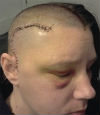
Cathleen Townsend, shortly after her surgery.

Townsend was referred to Montreal neurosurgeon Dr. André Olivier who, after examining her, agreed to perform the procedure.

“I thank that man every day,” Townsend says of Olivier.

Before her surgery, Townsend says she was sleeping about 12 hours per day. She was, as she says, “stuck in my home for 10 years.”

Her chronic fatigue has gone away since the surgery.

“I’m like the Energizer bunny today,” Townsend says. “I am 41 years old and I feel like I’m 20 all over again. I’m so full of energy. … The life I have now is amazing. I am so blessed.”

But it’s not just the surgery that has made a difference, Townsend notes. Her husband, Benjamin, has been supportive of her throughout their marriage. That support, she says, gone a long way in helping her overcome her challenges.

Asked if she has any advice for people living with epilepsy who think surgery might be a good option for them, Townsend suggests they become a self-advocate.

“Anyone who is not getting anywhere with their neurologist, go get a second opinion,” she says. “I feel it is extremely important for all to speak up and raise their voices on all issues (surrounding epilepsy).”

Writer: Deron Hamel

If you have feedback on this story, or have a story of your own that you would like to share, please contact the newsroom at 800-294-0051, ext. 23, or e-mail deron(at)axiomnews.com. You can also leave a comment below.

Sharing your story about epilepsy can make a difference

January 22, 2015

One of the great things about having the Voices of Epilepsy news program is that Epilepsy Ontario can help people share their inspirational stories about how they’ve conquered their condition and, in some cases, foster positive change.

The news program has even demonstrated lifesaving ability.615

In January 2013, it was announced there was a shortage of clobazam, an anti-seizure medication. Daryl Yeo, president of Epilepsy Toronto, received an e-newsletter from Epilepsy Ontario about the shortage — a situation he had not heard about.

Upon learning of the shortage, Daryl called his daughter, Lindsay, to let her know she needed to contact her pharmacy to get more information about the shortage. It turned out the pharmacy was out of stock.

While Lindsay eventually obtained the medication from another pharmacy, Daryl says it was only because of Epilepsy Ontario’s e-mail alert that she found out in time.

“If I hadn’t got the notice from Epilepsy Ontario giving us the heads-up, Lindsay wouldn’t have found out until probably a couple of days ago,” Daryl said at the time, adding that if people needing a medication only find out about shortages when they go to refill their prescription it can be too late.

Then there are the personal stories of triumph.

Such is the case of Peterborough resident Kerry Jenkins, who, after suffering tonic-clonic seizures for 12 years, had deep brain stimulation (DBS) surgery that changed her life.

Following the DBS surgery in December 2012, Jenkin’s tonic-clonic seizures stopped and she had approximately eight temporal lobe seizures per month. Of these, there were four different types of seizures. The DBS surgery has stopped two of the four types of seizures completely and reduced the number of seizures to approximately three per month.

Jenkins shared her story with Voices of Epilepsy to inspire people and to let others affected by seizure disorders know there is always hope.

“No matter how bad it gets, it can always get better, you just have to keep going,” Jenkins said. “Even though you have to go through a lot . . . things do get better — you just have to keep trying.”

Last October, 27-year-old Chelsea Kerstens accomplished something few will ever do — she scaled a 4,500-foot side of the Grand Canyon as part of Epilepsy Durham Region’s Epic Climb. The event was designed to raise awareness of epilepsy.

But for several years, Kerstens, who has epilepsy, was unable to participate in many activities because of her condition. This changed when her doctors discovered a combination of medications that caused her seizures to stop — permanently.

Today, Kerstens is an epilepsy awareness advocate.

“It’s an excellent feeling,” she said of her work in November. “The only way I can describe it is that it feels like I’m doing what I’m meant to be doing.”

Do you have an epilepsy story to tell? Have you experienced challenges you have had to overcome? Maybe you are struggling with an issue right now that you would like to share with others? Do you know of an employer or organization that has gone the extra mile in accommodating people living with seizure disorders? How about a teacher that who has worked hard to support a child in the classroom?

Epilepsy Ontario wants to hear your story. Tell us about your family, workplace, school or community experiences. To share your story, please contact the newsroom at 800-294-0051, ext. 23, or by e-mail at deron(at)axiomnews.com.

Writer: Deron Hamel

Weekend exhibit will raise awareness of epilepsy and brain research

January 14, 2015

Epilepsy Ontario, Epilepsy Toronto and Epilepsy Durham Region are collaborating this weekend to bring an interactive display about epilepsy to BRAINFest, a family-friendly celebration of brain research at Toronto’s Ontario Science Centre.

The epilepsy@work online resource will be discussed this weekend at BRAINFest.

BRAINFest will also provide an understanding of how people in different aspects of brain-health research are aligning their efforts to raise awareness and to improve the lives of people affected by epilepsy and other neurological conditions.

The purpose of BRAINFest is to share the latest developments in brain research with the public and to connect that research with the community, says Jordan Antflick, senior outreach lead with the Ontario Brain Institute (OBI).

A major focus of BRAINFest’s epilepsy segment is to promote epilepsy@work, an online resource developed by Epilepsy Toronto to help those employing people with epilepsy better understand, address and manage the needs of employees living with a seizure disorder.

Employers using the toolkit will find information about strategies they can use to best accommodate employees with a seizure disorder. The toolkit offers resources focused on three primary areas: understanding epilepsy; seizure safety; and first aid, just-in-time resources for human-resources professionals, managers and occupational health and safety specialists.

One of the most challenging aspects of epilepsy is not so much the disorder itself but the stigma attached to it. The epilepsy segment of BRAINFest will attempt to raise awareness about the condition so the public has a better understanding, Antflick says.

One of the challenges people living with seizure disorders face is finding and maintaining employment. This is where educating people about resources like epilepsy@work comes into play.

“The hope is that by (hosting an epilepsy segment at BRAINFest) it will allow the epilepsy groups to interact with the audience and have some direct contact to increase the education awareness about epilepsy,” Antflick tells Voices of Epilepsy.

“The idea (of BRAINFest) is to get people to learn about brain disorders. We want people to understand that Ontario has a historical strength in brain research and care for people with brain disorders, and this is a celebration of those people and their efforts.”

BRAINFest is an interactive exhibit being held at the Ontario Science Centre in partnership with OBI Jan. 17-18. Click here for more information.

Writer: Deron Hamel

If you have feedback on this story, or have a story of your own that you would like to share, please contact the newsroom at 800-294-0051, ext. 23, or e-mail deron(at)axiomnews.com. You can also leave a comment below.

2014 sees gains made in epilepsy research

December 18, 2014

The past 12 months have seen significant gains made in epilepsy research, with many studies offering newfound hope for people living with seizure disorders.

Genomic testing

At the start of the year, researchers with the Canadian Epilepsy Network (CENet) announced they would begin sequencing genomes from 2,000 patients with epilepsy. CENet researchers are collaborating with U.S. scientists who are sequencing 4,000 patients’ genomes as part of the Epi4K project, and Europe’s EpiPGX initiative, which is sequencing 2,000 patients’ genomes.

Dr. Berge Minassian
Dr. Berge Minassian

Encoded in the DNA of every organism, genomes contain the entire heredity of a person’s genetic history. By using a process called next-generation sequencing, researchers are examining genetic changes that predispose people to epilepsy and even predict a person’s response to anti-seizure medication.

Dr. Berge Minassian, one of CENet’s leaders, told Voices of Epilepsy in February that the study will also examine how genomic technologies will save the health-care system money and improve patient care.
 
“At the end of the whole project, we are hoping to come up with a test . . . where anybody with epilepsy will have their genome sequenced and we will be able to predict what type of epilepsy they have; whether they have easy-to-treat epilepsy or hard-to-treat epilepsy,” Minassian said.

Minassian underscored the importance of knowing a disease’s cause. Once the cause is understood, he said, researchers can start to learn about the mechanisms of the disease and why it occurs.

“(Knowing the cause of epilepsies) opens lots of entryways to treatment, because now you understand why one person’s brain is making seizures and another person’s brain is not,” he said.

Study examines effect of exercise on children with seizures

Established by the Ontario Brain Institute (OBI), the EpLink program is unique in Canada. It involves more than 25 researchers working at nine different university and hospital sites across Ontario.250

One of EpLink’s studies undertaken in 2014 is examining the impact exercise can have on reducing seizures in children who have epilepsy. The study, led by McMaster University researcher Dr. Gabriel Ronen, is ongoing. About 70 children and youths aged eight to 15 are participating in a walking program hosted at McMaster Children’s Hospital and Children’s Hospital of Eastern Ontario.

Participants walk with pedometers to measure the distance walked on an ongoing basis for six months, with seizures charted. For the next six months the children are monitored to see if there are sustained benefits.

Ronen and his team are trying to determine if exercise in children can change genetic functioning in the brain through a phenomenon called epigenetics. Through epigenetics, gene expressions can be manipulated, changing their function. 

“It seems that exercise may up-regulate certain gene expressions that improve certain brain factors,” Ronen said in May. “We believe that exercise may have an epigenetic effect that certain positive brain substances increase and some of the deleterious effects on the brain decrease.”

EpUp study focuses on alleviating depression

Another EpLink study commencing in 2014 seeks to alleviate depression in people living with seizure disorders.

The EpUp study aims to examine how psychoeducation programs that provide people with a better understanding of epilepsy, emotions and coping skills can improve emotional health in adults affected by the condition.

An estimated 30 to 40 per cent of people living with epilepsy experience depression that often goes unrecognized and untreated, EpUp lead investigator Kathryn Hum said in October. It’s a widespread issue, but there are few existing programs to intervene, she added.

The study is divided into two parts. The first involves sending participants online questionnaires. The second component sees participants attend an eight-week psychoeducation program which is conducted by telephone.

The two psychoeducation programs consist of weekly sessions that will run January to February and March to April of next year.

It was decided to host the program via telephone to increase access, since many people affected by a seizure disorder do not drive and many will be living outside of Greater Toronto.

Each session of the program is one hour long, one day per week. Participants can expect to learn skills and strategies designed to improve their symptoms of depression.

“What we would specifically like to see is an improvement in their depressive symptoms following their participation in the psychoeducation program,” Hum said.

Click here to learn more about brain health.

Writer: Deron Hamel
 
If you have feedback on this story, or have a story of your own that you would like to share, please contact the newsroom at 800-294-0051, ext. 23, or e-mail deron(at)axiomnews.ca. You can also leave a comment below.