Author Archives: DHamel

‘Epilepsy is just one part of my life,’ student says

February 9, 2026

By Deron Hamel

“Don’t let your epilepsy control you; it’s just one part of your life.”

Rachel Croft says if she could write a letter to her younger self, this would be the opening sentence.

Looking back, Rachel, now a university student, says when she experienced her first seizures she didn’t know what was happening, and it was scary.

“It was frustrating and confusing, and not having any answers made it even harder,” she says. “Once I got diagnosed with epilepsy, things made a little more sense. At least I knew what I was dealing with.”

The Oakville resident says it took time to get a diagnosis, and that made matters more difficult.

But she says she wants her younger self to know that the diagnosis will be a big hurdle she will successfully climb and that even though there will still be challenges, having epilepsy will not define who she is.

“It’s not always easy, and I still get a bit anxious and fearful about it, but I’ve learned how to manage it,” Rachel says of living with epilepsy. “I’ve figured out what helps my health and what doesn’t, and I’ve built a routine that works for me. It’s something I live with, but it doesn’t control my life as much now.”

Rachel says school became a significant challenge for her, primarily due to the frequent seizures she experiences. She says the episodes can take a toll, leaving a noticeable impact on her memory and her ability to retain new information.

Despite these challenges, Rachel says she is hopeful and that with the right support system and the academic resources available to her, she can – and will – continue pushing forward.

“Having epilepsy has made me more understanding, and it’s taught me that I can handle things even when they’re unpredictable,” Rachel says. “It’s shaped how I approach life and my goals. I know what I want, and I’ll work as hard as I can to get there.”

As a final note to her younger self, Rachel says she would send a reminder to never let epilepsy control her life.

“It’s just one part of your life,” she says. “You’ll figure it out, and you’ll get stronger from it, even if it doesn’t feel like it right now.”

Rachel is one of four recipients of Epilepsy Ontario’s 2025 scholarship. For more than 15 years, the organization has provided scholarships to exceptional students who have confronted and overcome significant barriers in their academic and personal lives due to epilepsy.
Student using epilepsy experience to fuel advocacy and research

January 9, 2026

By Deron Hamel

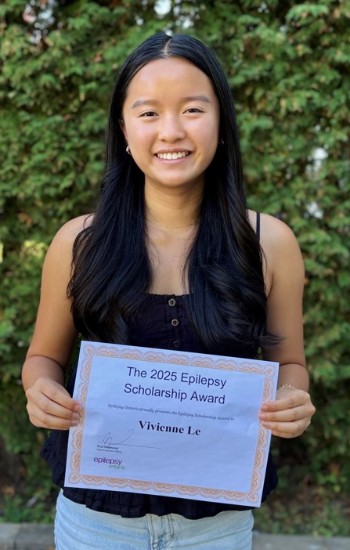
Vivienne Le says that if she could speak to her younger self, the first thing she would tell herself is that having epilepsy will not make her “less capable” or “less worthy.”

The student from Ottawa, who is studying health sciences at Queen’s University, says when she was younger she felt “frustrated and alone,” and wanted to blend in with her peers without constantly having to worry about having a seizure or hiding her condition.

Looking back, Vivienne says the things about epilepsy that frightened her when she was young now give her strength.

“I would tell (my younger self) not to be afraid to speak openly about her experiences because sharing her story will connect her to others and help combat the stigma that once caused her pain,” Vivienne says.

“(I would tell her that) one day, she will use her voice and her lived experience to make a difference through volunteering, advocacy and even contributing to epilepsy research. Most importantly, I would tell her that epilepsy will shape her, but it will not define her limits. She will go to university, chase big dreams and prove to herself that she is more than her diagnosis.”

Vivienne says her experiences with epilepsy have shaped her outlook and helped her navigate her career path. Once she completes university, she plans to attend medical school and become a doctor specializing in neurology. She says she wants to contribute to research and health-care initiatives aimed at improving quality of life for people living with epilepsy.

“Growing up with epilepsy has given me both a personal connection and a sense of purpose in this field,” she says. “I want to combine clinical care with research to improve treatments, reduce stigma and advocate for those living with neurological conditions.”

Vivienne’s passion in this area has already led her to get involved in epilepsy research at BC Children’s Hospital and the Centre hospitalier de l’Université de Montréal, where she has contributed to projects, including an analysis of epilepsy surgery outcomes.

Vivienne says epilepsy has motivated her to strive for achievements outside of academics, adding she recently created Viv in Purple, a social media platform to share her story of living with epilepsy and creating a space for others to share their experiences.

“The messages I have received from people who found hope through my posts remind me why I am committed to advocacy,” Vivienne says.

“Ultimately, living with epilepsy has not limited me. It has given me purpose and shaped my determination to turn personal challenges into opportunities to help others, whether through research, health care or advocacy.”

Vivienne is one of four recipients of Epilepsy Ontario’s 2025 scholarship. For more than 15 years, the organization has been providing scholarships to exceptional students who have confronted and overcome remarkable barriers in their academic and personal lives due to epilepsy.
“This $1,500 scholarship will help cover tuition and research-related expenses, allowing me to dedicate more time to my advocacy work and academic goals,” Vivienne says. “By combining my lived experience, academic background, and community involvement, I hope to create a more compassionate and supportive environment for people with epilepsy.”

Student uses epilepsy experience to guide health-care career

December 1, 2025


By Deron Hamel

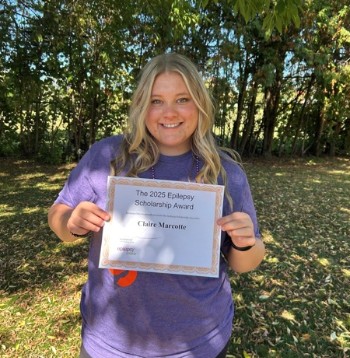
Claire Marcotte says her epilepsy has made her resilient because the condition has forced her to be organized and disciplined.

A resident of Kincardine who is planning to study medical radiation technology, Claire says epilepsy has shaped her into the person she is today and even set her on her career path.

After being diagnosed with epilepsy, Claire says she realized that she would face challenges such as ensuring she had enough sleep, keeping her stress low and avoiding activities that could trigger seizures.

“Managing my seizures included organization, self-discipline, and time management,” she says. “I always had to plan when to take my medication, to say no to certain activities, and making sure I wasn’t over exerting myself. Naturally, all of these qualities fell into my life academically. I learned about balance, preparation, time management and prioritizing.”

Living with epilepsy has meant Claire has had to make frequent hospital visits and appointments with specialists, experiences that helped direct her towards a health-care discipline after high school, she says.

“Having different people help me made me realize that I would like to contribute to the health-care system,” she says. “I want everyone to feel seen, supported and wanted. I want to give a voice to those who are struggling with invisible disabilities.”

Claire says she has chosen to pursue a career in medical radiation technology because it will allow her to work directly with patients. Her own experiences undergoing procedures for epilepsy – such as CT scans, EEGs and MRIs – taught her that most of the professionals administering these tests have never been through them themselves, she adds.

“Every time I went, I would ask if they’ve ever done one before,” Claire says. “Most of the time the answer was no. In my case, I have done each scan so I know how the patient is feeling.”

After graduation, Claire says her plan is to work in a hospital to help patients who need scans, address their concerns and provide a level of comfort.

“I want them to feel seen and to know that they aren’t alone because I have been in their position,” she says. Claire is one of four recipients of Epilepsy Ontario’s 2025 scholarship.

For more than 15 years, the organization has been providing scholarships to exceptional students who have confronted and overcome remarkable barriers in their academic and personal lives due to epilepsy.

“Receiving the $1,500 scholarship will relieve some financial stress so I can put more effort and focus into my academics and advocacy for those who need help finding a voice,” she says.

Under the Lights filmmaker Miles Levin on turning a short film into a global epilepsy movement

October 29, 2025

By Deron Hamel

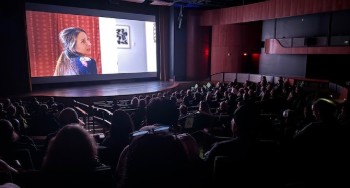
Under the Lights is a feature-length film about a high-school student named Sam (played by Pearce Joza) who is living with epilepsy. Sam is so desperate to live a life like other teenagers he attends his prom – even though he knows the lights in the auditorium will likely cause him to have a seizure.

The film was written and directed by Miles Levin, a California-based filmmaker who is living with epilepsy. Initially released as a 10-minute short film in 2020, the response was so favourable that Levin decided to make a full-length feature, which was released in September. The film is on the film-festival circuit and, to date, has received 12 awards.

Under the Lights also stars Lake Bell, Nick Offerman, Marin Hinkle, Randall Park and Peter Coyote.

Voices of Epilepsy recently spoke with Levin about the film.

Voices of Epilepsy: What motivated you to make Under the Lights?

Miles Levin: I have epilepsy, and I started to notice that when people talk about their epilepsy, their seizures are just part of the story. Usually we focus only on the seizures. What really makes life hard is the time between seizures. Whether they’re having a seizure or not, people live with epilepsy every second of the day. They’re afraid to form lasting relationships, afraid to ask for accommodations because they might lose everything – and that’s what I credit the high suicide and depression rates to.

All of this is solvable. Other marginalized groups have made progress through storytelling – by putting their authentic selves on screen. Cinema is the one place where people actually want to see something new. At awareness events, we’re often just talking to those who already understand. The people we need to reach won’t come to those events. You can’t educate them into submission – you have to entertain them.

So I thought: what if the point of reference for epilepsy wasn’t a hospital show or a horror movie, but Sam — a boy who’s so desperate to feel normal that he goes to prom knowing the lights might make him have a seizure? What if that’s what people thought of when they thought of epilepsy?

VoE: What has the response been like to the short and full-length film?

ML: The response was incredible. There was fan art from around the world. People messaged me saying they were seizure-free after being motivated to see their doctor again. Others went into medicine because they took an interest in epilepsy. It was staggering. So I thought – short films are great, but this one had more life in it. We had to make a feature. We put together an incredible cast and created what I think will be the biggest moment for epilepsy awareness of all time.

VoE: Have there been any particular reactions to the film that stand out for you?

ML: For many people, they feel that epilepsy is something they can’t talk about. And when they see somebody else talking about it and they look around for the response and they see that that person didn’t get beat up or called out online or treated poorly, they feel motivated to do it themselves and it creates a chain reaction. So when someone sends me a song about their epilepsy or about the characters in the movie, or when someone tells me they’re going to start writing a book, or that people have changed their career path – students have done their college projects on this – that’s a huge deal. It is making life a little easier for some people.

VoE: Are there any aspects of living with epilepsy that you wanted to convey on the screen?

ML: Many people who have epilepsy feel misunderstood. They are looked at like they are an outcast. It means people will have assumptions about you that are uncalled for. In the short and in the feature film we go over that. We show the impact on the caregiver, which is another untold story. The people who suffer silently keep the person in question afloat. I tried to do this in a fashion that is universal, where we focus on the feeling, on the emotion that comes with all of this because they might not know what it’s like to have epilepsy, but they know what it’s like to feel left out and misunderstood. If they make that connection, they’re going to be way more likely to sit and listen to the symptoms and be more interested in seizure first aid and all these other goals that we want to achieve. Any epilepsy organization will tell you it’s really hard to force these things on the audience, so let’s convince people to get together and listen to information that they would not have pursued themselves. It’s hard to do, but if you can have a movie night people will turn out.

VoE: What are your thoughts on how well-received the film has been as a full-length movie?

ML: It’s really, really amazing. When you’re sitting on a short film for so many years it’s easy to worry and to wonder if all this effort will pay off. But when I am standing at an event and there are 400 people lined up around the block to see my film, it’s a tremendous victory and it’s very, very meaningful.

To learn when Under the Lights is coming to your area, or for updates on the film, you can sign up on the movie’s website.

You can also learn more about Under the Lights on the movie’s Facebook and Instagram pages.