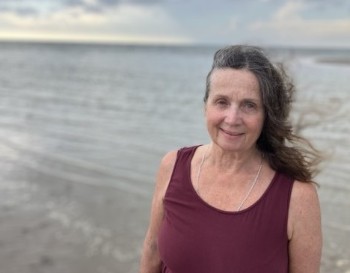

By Deron Hamel
After having a seizure at age 9, Judith Thompson says her parents urged her not to tell anyone because, they said, people would be frightened and avoid her.
Thompson, an award-winning Canadian playwright, screenwriter and recent first-time novelist, says her parents were doing what they thought was right and were trying to look out for her best interests.
“I had a seizure and my parents said, ‘No, she just fainted, that’s all’ – they didn’t want to accept it,” Thompson recalls in an interview with Voices of Epilepsy.
“Then I had another (seizure) in a crowded auditorium, which was so humiliating, and they told me not to tell anybody. They were just trying to think of me.”
But, against her parents’ advice, Thompson didn’t stay silent about her epilepsy – then or now – though she realizes many people did and continue to do so.
Decades later, Thompson is confronting that silence through In Crow’s Field, her new novel about a young girl and, later, a young woman dealing with trauma, bullying and epilepsy in the 1960s and 1970s.
A two-time Governor General’s Literary Award winner for drama and recipient of the Order of Canada, Thompson, in her debut novel, tells the coming-of-age story of Ana Burns, who is living with epilepsy and is haunted by a violent attack in childhood that led to the drowning death of her best friend, Patty.
Through the novel’s protagonist, Thompson addresses the stigma surrounding epilepsy, which, she says, was a driving force behind her inspiration to write the book.
“I realized there is very little out there in fiction, having main characters who live with epilepsy and cope with it quite well,” Thompson says. “We know our triggers, we learn our triggers, but sometimes they happen anyway. Yet there is extraordinary resilience in people living with epilepsy.”
Asked what she would like readers living with epilepsy to take away from In Crow’s Field, Thompson says she hopes they will see themselves reflected in the story and recognize that the condition does not have to define or limit their lives.
“I’m hoping that they see their experience and understand, also, that one can have agency because you feel passive in the face of something that could happen at any time, and that one can really punch back and lead a very busy and successful life,” she says.
“You don’t need to stop your life. You can have agency, you can be strong, and you can have an absolutely normal life.”
In Crow’s Field was published in April 2026 by Cormorant Books. Click here for more information.